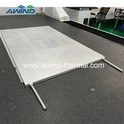
IGBT and SiC modules in inverters often run above 200 W/cm². An aluminum cold plate can struggle to spread heat fast enough. But even a pure copper cold plate will fail if the internal fins are not joined reliably.
This article explains why we chose vacuum brazing with 72%Ag – 28%Cu filler metal for our copper water block, and how it survives a 6Bar pressure test.
1. The problem with soft solder or torch brazing on copper
Soft solder (tin‑lead based):
Low thermal conductivity (~60 W/(m·K)) creates a bottleneck at the joint.
Low melting point and poor creep resistance – joints loosen under thermal cycling.
Torch (flame) brazing in air:
Copper oxidizes rapidly at high temperature.
Oxide layer prevents the filler metal from wetting the surface, leaving voids.
Not repeatable for complex folded‑fin geometries.
Both methods lead to leaks or high thermal resistance after months in a vibrating EV environment.
2. Why vacuum brazing is different
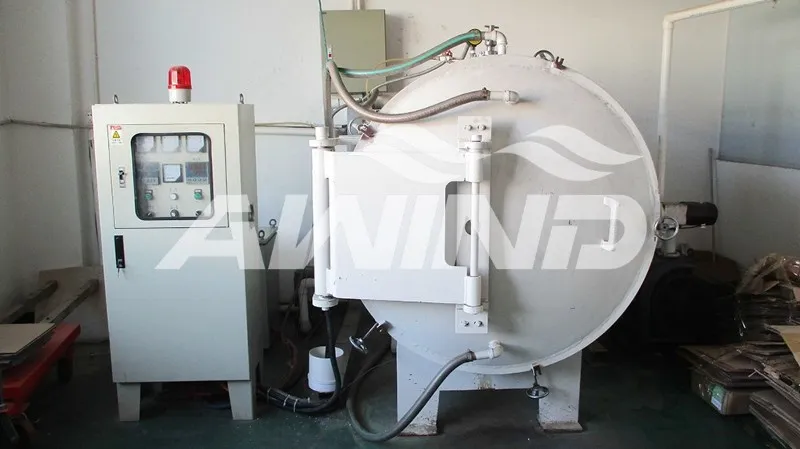
We use a vacuum furnace with pressure below 10⁻³ Pa.
No oxygen → no copper oxide → filler metal wets every surface.
Even heat distribution → minimal distortion of thin fins.
Braze joints are clean, shiny, and consistent from batch to batch.
3. Why 72Ag28Cu (silver‑copper) filler metal?
This is a near‑eutectic alloy (melts around 780°C). It outperforms other fillers for pure copper assemblies:
* Thermal conductivity ≈ 380 W/(m·K) – very close to pure copper. The brazed joint does not become a hot spot.
* Excellent wetting on copper – molten 72Ag28Cu flows into gaps as tight as 0.05 mm, filling the root of folded fins completely.
* High joint strength – tensile strength 300–400 MPa, much higher than soft solder. This allows the cold plate to hold 6Bar pressure without deformation.
* Galvanic compatibility – silver and copper have similar electrode potential in glycol‑water coolant, so no accelerated corrosion.
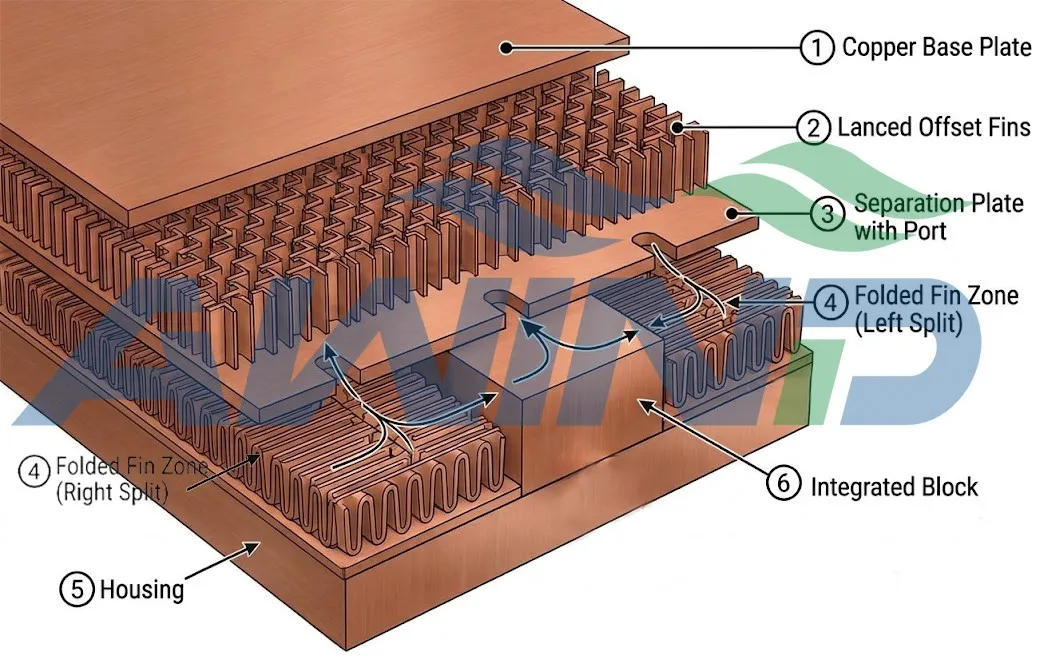
4.How we apply four layers of braze filler – matching the five‑layer stack
Our water block is not a simple box. It is built from five copper layers (from bottom to top):
-Base plate
-Separation Plate (separates staggered fins from folded fins)
-Cover (housing)
Between each adjacent pair of these layers we place a sheet of 72Ag28Cu braze filler. That means four layers of filler metal in total. The entire stack is then vacuum brazed in one cycle.
During brazing, the molten filler wets both surfaces of each layer and completely seals every interface. This method creates a strong, leak‑tight bond across all internal partitions – including the folded‑fin zone, the staggered‑fin zone, and the return channel. No separate brazing step is needed for each fin set.
5. Validation: 6Bar pressure test, 10 minutes
Every finished cold plate is tested with dry nitrogen at 6 Bar (600 kPa) for 10 minutes.
Acceptable pressure drop: < 0.05 Bar
No permanent deformation visible or measurable.
Why 6Bar?
Typical EV cooling system works at 1.5–2.5 Bar. 6Bar gives a 2–3x safety margin – enough to survive water hammer, altitude changes, and long‑term aging.
Passing this test proves that the vacuum‑brazed joints are truly leak‑tight and the copper structure can withstand internal pressure.
Summary and next steps
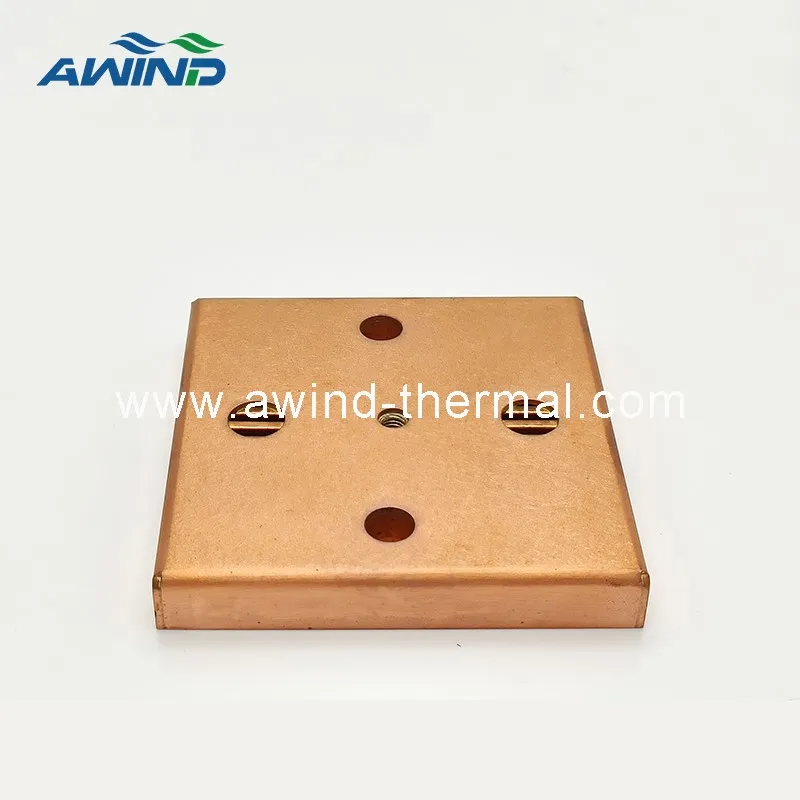
A pure copper cold plate only delivers its thermal potential when every joint is reliable. Vacuum brazing with 72Ag28Cu filler metal (applied in four layers) gives us high thermal conductivity, mechanical strength, and a leak‑tight assembly that passes 6Bar testing.
For detailed flow path design – how we use folded fins and staggered fins to extract heat – read our second article:
Folded Fin vs Staggered Fin: Liquid Cold Plate Flow Design