

Why does IGBT need heat dissipation
IGBT module is a high-power device that generates a large amount of heat during operation. The temperature range for normal operation of IGBT modules is -40 ° C-150 ° C. The failure of electronic components is mainly caused by high temperature, and the failure rate is directly proportional to the temperature of the chip. For every 10 ℃ increase in temperature, the reliability of electronic devices decreases by half. Therefore, in order to maintain the normal operation of the IGBT chip, a heat sink is needed to help it dissipate heat.
At present, most of the forms used for IGBT heat dissipation on the market are air cooling and liquid cooling.
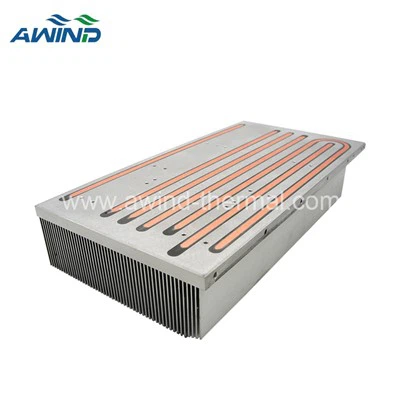
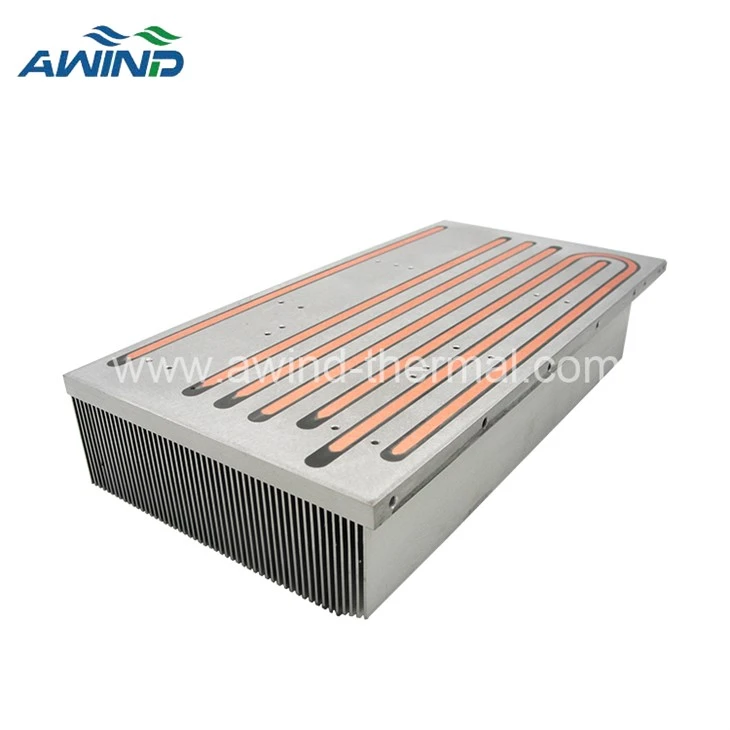
This article mainly focuses on the more common radiator : copper and aluminum heat sink used in IGBT. A large aluminum heat sink made by skiving fins technology, and CNC slotted on its bottom plate, filled with epoxy and coated heat pipes in the grooves, then subjected to surface treatment to obtain a smooth and flat surface.
A smooth and flat substrate surface can better contact the heat source, ensuring more efficient heat transfer. The presence of heat pipes can evenly distribute heat at both ends of the heat sink. High and dense fins can increase the heat dissipation surface area, making the contact area between heat and air larger.
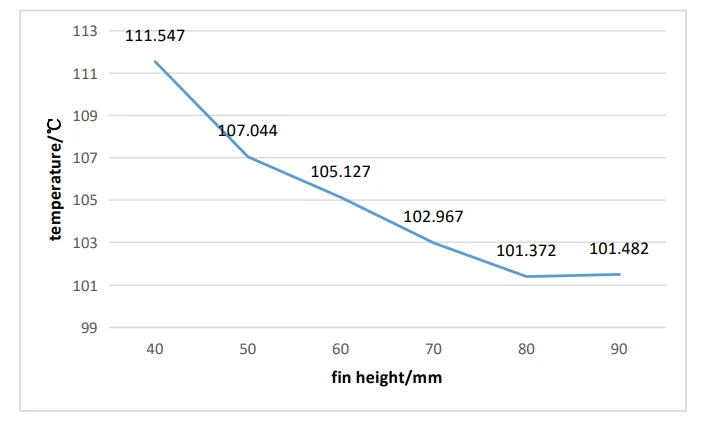
Figure 1 Relationship between fin height and heatsink temperature
As the height of the fins increases, the temperature will decrease accordingly. This is because the heat transfer from the heat sink to the air also increases, thereby reducing the temperature of the heatsink.
However, as the height of the fins continues to increase, the temperature drop gradually slows down because the heat transfer at the lower part of the fins has been fully completed, and further increasing the fin height will not enhance convective heat transfer.

Figure 2: Relationship between Fin Thickness and Heat Sink Temperature
When the thickness of the fins increases, the temperature decreases, and the heat dissipation effect is best when the thickness is 4mm.
As a thermally conductive object, the thickness of fins can affect the convective heat transfer efficiency. When the thickness of the fins increases, the convective heat transfer effect will be enhanced, but it will not be obvious. When it increases to 4.5mm, the temperature remains almost unchanged.
Due to the fact that the thickness of the fins is much smaller than their height, it can be assumed that the effect of fin thickness exceeding 4.5mm on heat dissipation performance is minimal.

Figure 3. The relationship between fin spacing and heatsink temperature
The variation law of fin spacing is divided into two parts. As the spacing between fins increases, the temperature initially decreases and then stabilizes, achieving optimal heat dissipation. As the spacing between fins increases, the pipe resistance between fins decreases, thus enhancing the heat dissipation effect.
However, as the spacing between fins continues to increase, the resistance of the pipeline remains almost unchanged, so the temperature of the heatsink also tends to stabilize.
The above three sets of data indicate that IGBT heat sinks are not necessarily better with higher or thicker fins, or with denser fin spacing. The best heat sink should be analyzed in combination with heat dissipation requirements and heat sink costs. And Awind has over 20 years of experience in heat dissipation, which can provide you with professional advice in this area, allowing you to achieve a win-win situation in both heat dissipation effect and cost.
Hot Tags: copper & aluminum heat sink for igbt, China, suppliers, manufacturers, factory, customized, free sample, made in China, Vapor Chamber, Zipper Fin Heat Sink, Heat Sink with Copper Heat Pipe, High Quality Cooling Heat Sink, CPU Heat Sink Design, OEM Heat Sink