

With the continuous enhancement of electronic product functionality, more features and higher reliability are needed, and excessive heat remains a major obstacle to developing next-generation applications with better performance and breakthrough innovation.
Every industry, especially mobile, healthcare, telecommunications, and the Internet of Things, is developing new products and systems that must be lightweight, multifunctional, and able to manage high heat loads with high reliability.
Engineers find it difficult to effectively handle heat because consumers require smaller, thinner, and more powerful devices, as well as more options, functions, and capabilities.
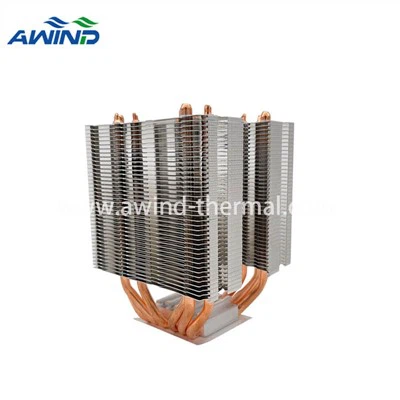
Two phase cooling is rapidly developing and becoming increasingly popular in solving these problems. Heat pipes are particularly suitable for heat dissipation to achieve faster heat dissipation, lighter weight, higher reliability, and longer lifespan. But the most significant advantage of heat pipes is their design flexibility, which allows them to be easily embedded in radiator, greatly improving cooling efficiency and capacity.
The heat pipe will generate effective and long-lasting cooling solutions. Awind has been innovating and manufacturing heat pipe solutions for twenty years. Our experience enables us to design and manufacture effective and long-lasting cooling solutions that can operate under the most demanding environmental conditions.
The ductile copper wall and wick can be bent or flattened to meet the thermal and geometric requirements of the application. This can be used to reduce overall size, increase surface contact, or arrange heat pipes around installation hardware, etc. Heat pipes can be embedded into other technologies to accelerate heat diffusion, or used within the system to transport heat from the heat source to a safe place for dissipation.

Misconception 1: If the heat pipes are broken, they will get liquid on the electronic devices.
Truth: Heat pipes is hard to been broken. In extremely unlikely circumstances, a very small amount of liquid in the pipeline will completely adsorb into the wick of the heat pipe and cannot drip or leak onto the electronic device.
Heat pipes are essentially sturdy and a purely passive system, with no moving parts that will wear out over time. To "break" a well made heat pipe, you need to cut it open or repeatedly bend or fold it. The heat pipe is filled with vacuum during filling, ensuring that the amount of fluid contained in the pipeline always exists in the form of steam, so it will not drip.
Its durability, higher reliability, and leak free characteristics make heat pipes be the solution for aerospace, medical, consumer electronics, high-power applications that require high reliability, and markets where leakage from traditional liquid solutions may cause catastrophic impacts.
Misconception 2: Heat pipes are very heavy
Truth: Heat pipes can reduce more weight than add other components.
Because they are usually made of copper (a heavier material), some people believe that integrating heat pipes will increase the weight of their solutions. Although heat pipes are made of copper, but they are hollow, which can reduce the weight of the solution and improve thermal performance in multiple ways.
Heat pipes are typically used to transfer heat to the areas which is cooler, more remote in equipment or components. Fans and lightweight fin structures can be added to these spaces to reduce the overall size and weight of cooling solutions.
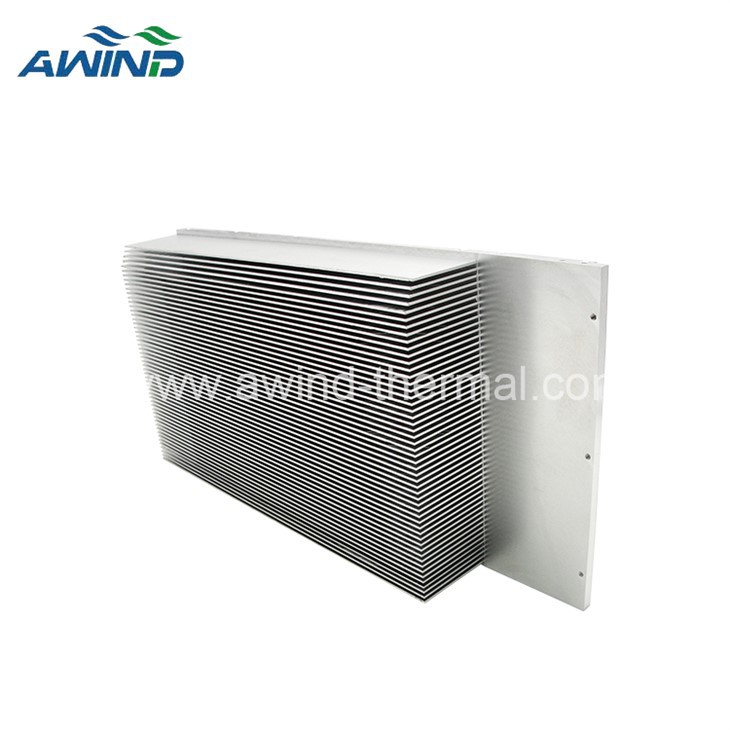
Another common example is to replace traditional copper or larger heat sinks with aluminum heat sink bases with embedded heat pipes. The high heat dissipation efficiency of heat pipes can evenly and quickly distribute heat throughout the entire radiator, thereby improving radiator efficiency, reducing radiator size and required material quantity, and thus reducing the overall weight and cost of the solution.
Misconception 3: Heat pipes can only be used together with evaporators and condensers at both ends
Truth: Heat pipes work along the entire length of the pipeline, and regardless of their position on the pipeline, they consistently transfer heat from the hotter areas to the colder areas.
Heat pipes are usually designed as thermal management components to transport heat from one heat source to the other for safe and effective dissipation. This utilization is common, but it is not the only way to use heat pipes.
The heat pipe core suction structure allows them to work in any direction and typically runs through the entire length of the pipeline. Heat essentially propagates from heat to cold, and the same goes for heat pipes. No matter where the heat is placed along the pipeline, it always flows from the heat source to the condensation point and then returns through the wick again. This increases design flexibility and heat pipe usage options to achieve more innovative and cost-effective heat management.
One way to utilize it is to embed heat pipes to spread heat instead of transferring it. When the heat pipe is embedded at the bottom of the radiator, heat will condense along the entire length of the heat pipe rather than a fixed area. For example, integrating heat pipes into air-cooled heat sinks to expand high-power performance and reduce the need for liquid systems when cooling high-power IGBTs.
Misconception 4: Heat pipes can only propagate heat along a straight line. If I want to distribute heat throughout the base, I need a vapor chamber.
Truth: Heat pipes can be bent and used in a way similar to vapor chamber, but with a more complete structure.
When heat pipes are initially introduced and integrated with other technologies, they are embedded in straight lines. In order to dissipate heat more evenly, engineers used vapor chamber. Although vapor chamber can effectively achieve uniform heat diffusion, they also have their own series of design challenges, which may not be suitable for every application.
Although the heat pipe only moves heat along its axis, the axis can be bent or used in conjunction with multiple heat pipes to effectively act as a planar diffusion mechanism similar to vapor chamber. Heat pipes are cheaper, have higher structural integrity, and can be designed to mimic the functionality and performance of vapor chamber. If properly embedded, the heat pipe can withstand considerable installation force in applications where the vapor chamber is too fragile.

Misconception 5: Heat pipes must be very hot to work.
Truth: Manufacturing technology enables heat pipes to function properly even in small temperature differences.
Due to the dependence of heat pipes on evaporation and condensation for operation, there is a common misconception that significant temperature differences or high temperatures are necessary to benefit from the use of heat pipes.
However, due to the fact that the heat pipe is filled with vacuum before sealing, the fluid exists in both liquid and vapor forms at its saturation point. This is similar in principle to boiling liquids at lower temperatures at higher altitudes and lower pressures. Molecules require less heat to be excited enough to transform the phase from liquid to vapor. Therefore, the temperature of the heat source does not need to reach the standard room temperature boiling point, which will cause a change from liquid to gas phase. In fact, the difference between the "hot" and "cold" areas of a heat pipe only requires a few degrees to be effective. This is one of the main benefits of using heat pipes, as it can minimize the thermal resistance of the solution.
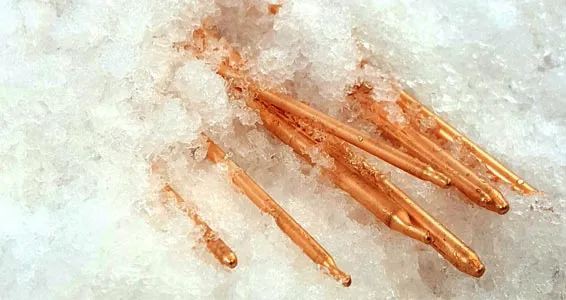
Misconception 6: Heat pipes cannot be used under freezing conditions
Truth: Heat pipes can be developed to work under extremely harsh conditions, such as freezing environments.
The operation of heat pipes under environmental conditions depends on the material and design. Although copper+water is the most popular combination; Other materials can be used according to special requirements. Liquids such as ammonia, methanol, and acetone can all combine with compatible metals to form heat pipes that can operate at temperatures far below -60 ° C.
Misconception 7: Heat pipes are very expensive
Truth: Adding heat pipes can reduce solution costs.
The ductility of copper enables heat pipes to be manufactured economically, reliably sealed, and easily bent and pressed into specific geometric shapes. Awind has a comprehensive manufacturing process and heat pipe design technology, which can produce highly cost-effective copper+water high-performance heat pipes. Heat pipes allow engineers to use aluminum and embedded heat pipes in applications that require copper fin bases, thereby reducing costs. They can also eliminate the need for fans or other components, thereby saving money and weight.
Conclusion
From the above popular science, it can be seen that heat pipes have the advantages of high thermal conductivity, low leakage, stable structure, and low cost. Therefore, in many heat dissipation schemes, they are very worthwhile to consider as thermal components, which can significantly improve the overall heat dissipation effect.
There are various combinations of heat pipes and heat sinks, which can be flexibly designed according to space, power consumption, and structural requirements. If you are planning related cooling solutions, please feel free to contact Awind at any time. We have extensive experience in the design of heat pipe structures and have hundreds of mature application cases of heat pipes and heat sinks, which can provide you with professional references and optimization suggestions.
https://www.awind-thermal.com/heat-sink/heat-pipe-heat-sink/
Hot Tags: common misconceptions about heat pipe cooler, China, suppliers, manufacturers, factory, customized, free sample, made in China, Heat Sink with Copper Heat Pipe, High Quality Cooling Heat Sink, OEM Heat Sink, CPU Heat Sink Design, Vapor Chamber, High Quality Heat Sink