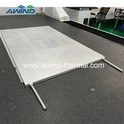
Why Cooling Is One of the Biggest Challenges for Space Data Centers
As artificial intelligence continues to increase computing demand, interest in space-based data centers is growing rapidly. Several aerospace companies and technology organizations are already exploring orbital computing platforms that could process data directly in space instead of relying entirely on Earth-based infrastructure.
One of the biggest advantages of space data centers is energy availability. In orbit, satellites can continuously harvest solar energy without depending on traditional power grids. This could significantly reduce the long-term energy cost of large-scale computing systems.
However, building a space data center is far more complicated than simply launching servers into orbit.
High launch costs, limited satellite lifespan, difficult maintenance, radiation exposure, and thermal management are all major engineering challenges.
Among them, cooling may become one of the most critical limitations for future orbital computing systems.
Space Is Cold - But Cooling in Space Is Extremely Difficult
Many people assume that cooling equipment in space should be easy because outer space itself is extremely cold.
In reality, heat dissipation in space is much more difficult than on Earth.
Traditional data centers mainly rely on air convection and forced-air cooling systems. Fans move air across CPUs, GPUs, and AI accelerators to remove heat generated during operation.
But in space, there is no atmosphere and no air movement.
Without air, convection cooling becomes impossible.
This means:
* Traditional fan cooling cannot work
* Air-cooled heat sinks become ineffective
* Heat cannot naturally dissipate into the environment
As AI chips continue to increase in power density, thermal management becomes one of the biggest engineering challenges in orbital computing systems.
Without efficient cooling, high-performance processors could quickly overheat, reducing reliability or even causing permanent damage.
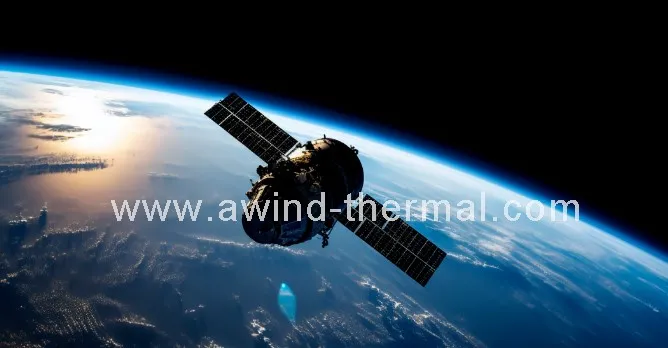
How Space Data Centers Manage Heat
Because convection cooling cannot function in a vacuum environment, space thermal management systems mainly rely on three stages:
* Heat collection at the chip level
* Internal heat transfer through thermal control systems
* Final heat rejection through radiation into deep space
This type of multi-level thermal architecture is already widely used in satellites, spacecraft, and space stations.
Chip-Level Thermal Collection
The first step is removing heat directly from the chip itself.
Modern AI processors and high-performance computing chips can generate extremely high heat flux, sometimes reaching hundreds of watts per square centimeter.
If this heat is not transferred away quickly, the chip temperature can rise rapidly and damage sensitive electronic components.
To reduce thermal resistance between the chip and the cooling structure, aerospace thermal systems often use high-performance thermal interface materials (TIMs), including:
- graphite-based materials
- liquid metal compounds
- boron nitride thermal pads
- carbon fiber thermal materials
These materials help fill microscopic gaps between electronic components and cooling modules, improving thermal conductivity.
In many aerospace applications, vapor chambers are also used to rapidly spread heat away from localized hotspots.
A vapor chamber works through phase-change heat transfer, allowing heat to spread much faster than traditional solid metal conduction.
For extremely high heat density applications, embedded microchannel liquid cooling can also be used. In this design, coolant flows through miniature internal channels to directly remove heat from the heat source.
However, liquid cooling in space introduces additional engineering challenges:
* coolant freezing at low temperatures
* fluid behavior under microgravity conditions
* sealing reliability
* material expansion caused by extreme temperature differences
These factors require much stricter thermal and structural design compared to terrestrial cooling systems.
Internal Heat Transfer Systems
After heat is collected from electronic components, it must be transported efficiently to external radiators.
For medium and long-distance thermal transfer inside spacecraft, heat pipes and loop heat pipes (LHP) are among the most widely used technologies.
Heat pipes use the phase change of a working fluid - evaporation and condensation - to transfer heat with extremely high efficiency.
Compared with conventional solid metal conduction, heat pipes provide:
* excellent thermal transfer capability
* long-distance heat transport
* good temperature uniformity
* passive operation without additional power consumption
Loop heat pipes are especially important in aerospace applications because they can transport large heat loads over long distances while remaining highly reliable.
Another advanced technology is the variable conductance heat pipe (VCHP), which introduces non-condensable gas into the system to automatically regulate thermal performance under changing thermal conditions.
However, passive thermal control alone is usually insufficient for large-scale space computing systems.
As thermal loads continue to increase, active cooling technologies become necessary.
One of the most mature active thermal management solutions is the Mechanical Pump Fluid Loop (MPFL).
In an MPFL system, mechanical pumps circulate coolant through cold plates attached to electronic equipment. The coolant absorbs heat from distributed heat sources and transports it to external radiator systems.
This technology has already been used in multiple aerospace programs because of its strong controllability and stable thermal performance.
Radiative Cooling: The Final Step
In space, the final stage of heat dissipation relies entirely on thermal radiation.
Unlike Earth-based cooling systems, spacecraft cannot release heat into surrounding air. Instead, heat must be emitted into deep space in the form of infrared radiation.
This is why radiator panels are critical components in spacecraft thermal control systems.
A space radiator functions somewhat similarly to a solar panel in appearance, but instead of collecting solar energy, it releases thermal energy.
The cooling performance of a radiator mainly depends on:
* radiator surface area
* surface temperature
* coating emissivity
* solar absorption characteristics
To improve thermal radiation efficiency, aerospace radiators often use high-emissivity coatings and low solar absorption materials.
Some advanced materials currently being studied include:
* carbon nanotube coatings
* photonic crystal films
* second-surface mirror materials
These technologies help radiators efficiently emit heat while reducing unwanted solar heating.
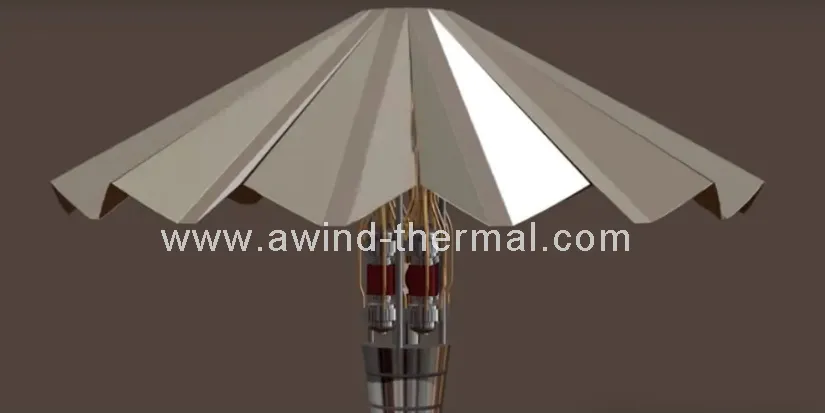
Because larger radiator surfaces provide higher cooling capacity, deployable radiator structures are commonly used. During launch, the radiator remains folded to save space. Once in orbit, it expands to increase heat rejection area.
However, thermal control in space is not always straightforward.
When spacecraft face direct sunlight, radiator panels may absorb heat instead of rejecting it. In shadowed regions, temperatures can drop dramatically.
As a result, aerospace thermal systems must carefully control radiator orientation, insulation design, and thermal regulation strategies to maintain stable operating temperatures.
Some advanced spacecraft even use adaptive radiator systems with movable louvers or smart materials that automatically adjust thermal emissivity under changing environmental conditions.
Aerospace Thermal Design Requires Precision Manufacturing
At AWIND, we have also participated in aerospace-related thermal management projects involving aluminum cooling structures combined with vapor chamber technology.
In high heat flux regions, vapor chambers are positioned directly near the heat source to rapidly absorb and spread heat across the structure.
Instead of relying on a single vapor chamber, multiple vapor chambers can be integrated throughout the thermal structure, allowing several heat sources to be cooled simultaneously.
The aluminum base structure is manufactured through precision CNC machining and secondary processing to ensure flatness, structural stability, and thermal contact quality.
For aerospace applications, dimensional accuracy is extremely important because even small deviations can affect thermal resistance and long-term reliability.
To maintain manufacturing precision, critical dimensions are verified using CMM inspection equipment throughout the production process.
As computing density continues to increase in both terrestrial and orbital systems, advanced thermal management technologies such as vapor chambers, cold plates, heat pipes, and liquid cooling systems will become increasingly important in future aerospace infrastructure.
Conclusion
Space data centers may eventually become part of the future AI computing industry, especially as global demand for computing power continues to rise.
While solar energy provides a potential solution for power generation in orbit, thermal management remains one of the biggest engineering barriers.
Because convection cooling is impossible in vacuum environments, future space computing systems will rely heavily on advanced heat conduction, liquid cooling, heat pipe technology, and radiative thermal control systems.
As aerospace electronics continue to evolve toward higher power density and smaller form factors, thermal engineering will play an increasingly critical role in ensuring reliability, stability, and long-term performance in space environments.