Custom Thermal Management Solutions: From Simulation to Scalable Manufacturing
AWIND Thermal provides comprehensive thermal engineering services to help customers solve complex heat dissipation challenges. Our engineering team supports thermal simulation, CFD analysis, heat sink optimization, liquid cooling design, prototype verification, and mass production.
By combining simulation and manufacturing expertise, we can shorten development cycles, reduce design risks, and improve thermal performance before physical prototypes are built.
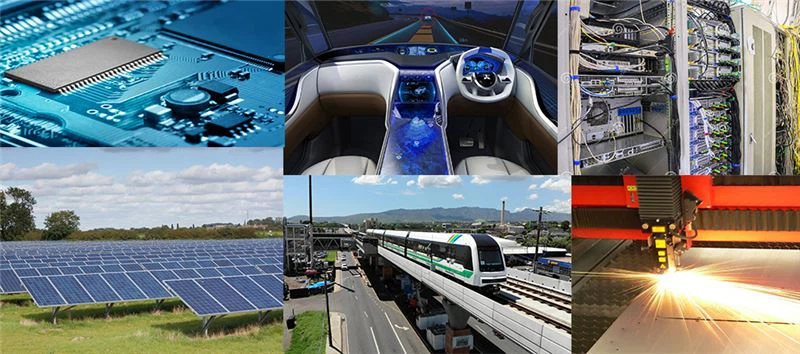
Our thermal management services are widely used in power electronics, AI servers, energy storage systems, telecommunications equipment, laser systems, and industrial automation applications.
Thermal Management: From Afterthought to Front-End Design
As electronic systems continue to push toward higher power density and smaller form factors, thermal management is no longer a downstream fix-it has become a critical part of front-end product design.
Across applications such as telecom base stations, AI servers, electric vehicle powertrains, and industrial control systems, excessive heat directly impacts performance, reliability, and product lifespan. Thermal throttling, component degradation, and unexpected system failure are no longer acceptable risks in modern engineering.
Standard off-the-shelf heat sinks can address basic requirements. However, when facing complex constraints-limited space, uneven heat distribution, harsh environments (dust, vibration, humidity), and strict cost targets-custom thermal management solutions are often the only viable path to long-term stability.
With over 20 years of engineering and manufacturing experience, AWIND Thermal provides not only a full range of products-from extruded heat sinks and skived fins to liquid cold plates and vapor chambers-but also a complete engineering workflow, including thermal simulation (CFD analysis), prototyping, and mass production.

What Is Custom Thermal Design?
Custom thermal design is not simply about adjusting the dimensions of a heat sink. It is a comprehensive engineering process that aligns multiple variables into a single optimized solution.
A well-designed system considers:
Heat source characteristics (power, heat flux, transient behavior)
Mechanical constraints (available space, component layout)
Operating environment (ambient temperature, airflow, protection level)
Manufacturing methods (extrusion, skiving, welding, CNC machining)
The goal is straightforward but technically demanding:
to transfer heat from the source to the cooling medium (air or liquid) as efficiently as possible, using minimal space, weight, and cost.
In many real-world applications, an optimized custom solution can improve system power density by 15%–30% without increasing structural complexity.
Why Thermal Simulation Matters
Thermal simulation, particularly CFD (Computational Fluid Dynamics) analysis, plays a central role in modern thermal design.
Without simulation, development often relies on trial-and-error prototyping, which increases both cost and time. By contrast, simulation allows engineers to evaluate performance before any physical sample is built.
One of the most immediate benefits is the ability to predict temperature distribution, thermal resistance, and airflow behavior early in the design phase. This significantly reduces the need for multiple prototype iterations.
Simulation is especially critical for projects involving tooling, such as extruded or die-cast heat sinks. Discovering performance issues after tooling is completed can lead to costly redesigns and delays. CFD analysis helps mitigate this risk by validating the design in advance.
It also enables detailed optimization of key parameters, including fin geometry, airflow paths, and internal liquid channels. These refinements often make the difference between a marginal design and a robust, production-ready solution.
In practice, thermal simulation is not just a design aid-it is a decision-making tool that directly impacts cost, reliability, and time-to-market.
Case Study: Copper Tube Liquid Cold Plate for a 1200W Laser System
A recent project involved a manufacturer of industrial laser equipment developing a new 1200W fiber laser module. The thermal requirements were particularly demanding due to high heat flux and limited installation space.
Engineering Challenges
The system presented several constraints:
Extremely high localized heat flux, reaching up to 120 W/cm²
Multiple laser diode arrays with uneven heat distribution
Very limited internal space, making large air-cooled solutions impractical
Continuous operation with strict temperature stability requirements
Air cooling was quickly ruled out, making a liquid cooling solution necessary. However, the design also needed to remain compact and manufacturable at scale.

Solution Development
To address these challenges, a copper tube embedded liquid cold plate was developed and iteratively optimized through CFD simulation.
Key design considerations included:
Using high-conductivity copper tubes as the primary heat transfer path
Optimizing tube layout to match the heat source distribution
Designing internal flow paths to ensure uniform coolant distribution
Minimizing thermal contact resistance between the cold plate and heat sources

Thermal Simulation and Optimization
During the simulation phase, multiple design variables were evaluated:
Different coolant flow rates and their impact on temperature distribution
Pressure drop across the system under varying conditions
Effectiveness of tube positioning in reducing localized hotspots
Coolant temperature rise along the flow path
Two different flow rate scenarios were analyzed in detail, revealing how fluid velocity influenced thermal performance, pressure characteristics, and overall system efficiency.
These insights guided further refinements in both tube arrangement and channel design.
Results
The final solution delivered stable and efficient thermal performance:
Significant reduction in peak temperature of critical components
More uniform temperature distribution across the module
Improved system stability during continuous operation
Reduced development time through fewer prototype iterations
Lower overall project cost by minimizing redesign risks
This project demonstrates how simulation-driven design can translate directly into reliable, manufacturable thermal solutions.
The full case study is available here: Liquid Cold Plate with Copper Tube
Our Custom Thermal Solutions
AWIND Thermal offers a range of custom cooling solutions tailored to different power levels, spatial constraints, and cost targets.
Liquid Cold Plates are typically used in high heat flux applications such as EV battery systems, high-power laser equipment, AI servers, and IGBT modules. These solutions support complex internal channel designs and can handle heat loads from 500W to over 3000W.

Heat Pipe Heat Sinks are well-suited for space-constrained environments, including telecom equipment and industrial PCs. By leveraging phase-change heat transfer, they efficiently move heat away from critical components.

Extruded and Skived Heat Sinks provide cost-effective solutions for power electronics and general applications. With flexible fin geometries and surface treatments, they are widely used in the 5W–200W range.
Each solution can be fully customized based on your application requirements.

Custom Design Process
A structured development process is essential for achieving reliable results while keeping projects on schedule.
Our workflow typically includes:

Applications
Thermal design requirements vary significantly across industries.
In EV battery cooling, solutions must withstand vibration while remaining lightweight and corrosion-resistant, making liquid cooling systems the preferred choice.
In power electronics, long-term reliability under continuous high load is critical, requiring robust and stable thermal structures.
In data centers, increasing power density driven by AI workloads is accelerating the shift from air cooling to liquid cooling technologies.
Our Thermal Solution Development Process
Step 1: Thermal Requirement Analysis
Identify heat generation, ambient conditions, space constraints, and reliability requirements.
Step 2: CFD Thermal Simulation
Perform thermal analysis and airflow/liquid flow simulation to evaluate different cooling concepts.
Step 3: Thermal Design Optimization
Optimize fin structures, cold plate channels, heat pipes, vapor chambers, and material selection.
Step 4: Prototype Manufacturing
Build engineering samples for testing and validation.
Step 5: Thermal Performance Testing
Verify cooling performance through laboratory testing.
Step 6: Mass Production
Transition validated designs into stable production.
Why Work With AWIND Thermal
What differentiates a thermal solution provider is not just product capability, but the ability to bridge engineering design and manufacturing execution.

FAQ
What is the difference between a heat pipe and a vapor chamber?
Heat pipes transfer heat in a linear path, while vapor chambers distribute heat across a surface, making them more suitable for high heat flux applications.
How do I choose between air cooling and liquid cooling?
This depends on power level, space, and cost. For applications above 500W, liquid cooling is often more effective.
Can you manufacture cold plates with complex internal channels?
Yes. We support multiple manufacturing methods, including embedded copper tubes, CNC machining, and brazed structures.