Application of Vapor Chambers in High-Power LED Lighting
High-power LED lighting has revolutionized the illumination industry with its energy efficiency, long lifespan, and compact design. However, thermal management remains a critical challenge, as excessive heat accumulation accelerates light decay, reduces luminous efficiency, and shortens LED lifespan. Traditional cooling solutions, such as aluminum substrates or heat pipes, often struggle to handle the high thermal flux generated by LEDs. In this context, vapor chambers (VCs), a type of two-phase heat transfer device, have emerged as a game-changing technology for thermal management in high-power LED systems.


1. Technical Challenges in High-Power LED Cooling
High-power LEDs generate significant heat at the junction, with temperatures exceeding 70°C causing rapid degradation of phosphor materials and reduced luminous output. Conventional cooling methods, such as multi-layer structures combining metal-core PCBs and heat sinks, introduce cumulative thermal resistance due to interfaces between materials like bonding layers, substrates, and heat sinks. This "thermal bottleneck" limits heat dissipation efficiency and complicates temperature control. For instance, traditional aluminum substrates and copper-based solutions are insufficient for high-density LED arrays, leading to localized hotspots and accelerated aging.
2. Vapor Chambers: Design and Advantages
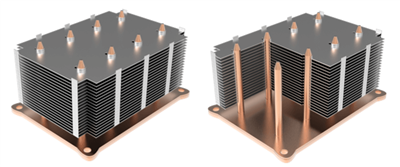
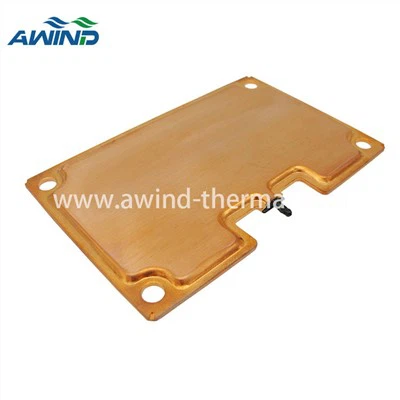
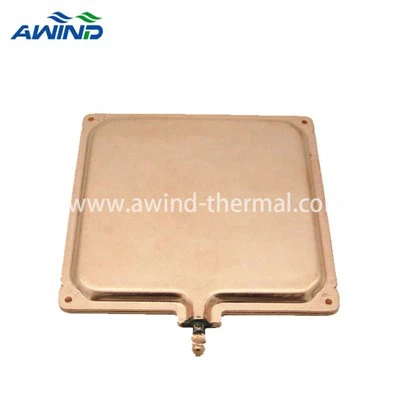
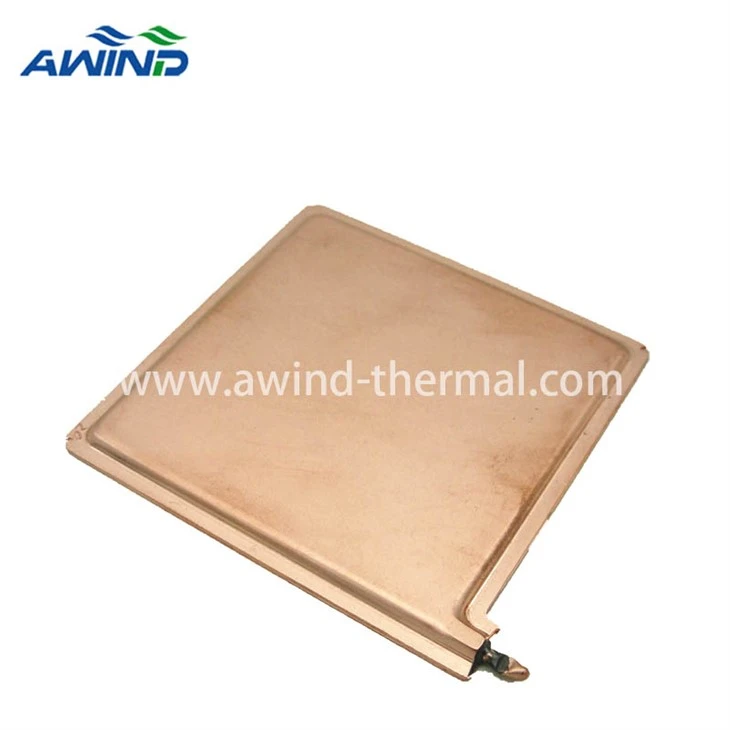
Vapor chambers address these limitations by leveraging phase-change principles to achieve ultra-high thermal conductivity (≥800 W/mK), nearly double that of pure copper. Their flat, planar structure allows direct integration with LED chips, eliminating intermediate layers.Key structural innovations include:Wavy Internal Surfaces: By designing the upper plate of the VC with a corrugated profile, condensed fluid rapidly flows toward thicker regions, enhancing heat exchange efficiency and enabling vertical or non-horizontal installation.Capillary Structures: Optimized capillary networks (e.g., sintered powders or graphene-enhanced composites) ensure uniform fluid distribution, even under high heat flux conditions.Hybrid Cooling Systems: Combining VCs with heat pipes or finned heat sinks creates dual-phase cooling, further improving thermal dissipation in applications like streetlights or industrial lighting.
3. Performance Benefits and Applications
The integration of vapor chambers offers multiple advantages:Extended Lifespan: By maintaining Tj below 70°C, LED modules exhibit minimal light decay (e.g., <1% efficiency loss per 10°C reduction), ensuring longevity exceeding 20,000 hours.Cost Efficiency: Simplified architectures reduce material and assembly costs.Versatility: VCs adapt to diverse configurations, from compact COB (Chip-on-Board) LEDs in streetlights to high-intensity industrial fixtures. Graphene-coated VCs further enhance thermal radiation, addressing heat challenges in confined spaces.
4. Case Studies and Future Trends
Street Lighting: VCs are widely adopted in LED streetlights, where uniform heat distribution is critical. For example, a patented design using curved VCs and phase-change materials achieved a brightness uniformity of 0.7+ while withstanding harsh environmental conditions.Future advancements may focus on smart thermal management, such as integrating temperature sensors with adaptive current drivers to dynamically adjust heat dissipation. Additionally, graphene-enhanced VCs and modular designs promise higher scalability for next-generation LED applications.
Conclusion
Vapor chambers represent a transformative solution for high-power LED thermal management, combining high thermal conductivity, structural flexibility, and cost-effectiveness. As LED technology evolves toward higher power densities, VCs will remain pivotal in enabling efficient, durable, and sustainable lighting systems.
Hot Tags: Vapor Chamber Heat Sink for High-Power LED Lighting | Thermal Management Solutions, China, suppliers, manufacturers, factory, customized, free sample, made in China, Heat Pipe Heat Sink, Cold Forged Heat Sink, Ultra Thin Vapor Chamber Heatsink, Vc Heat Sink, Vapor Chamber Heatsink, Vapor Chamber Heat Sink