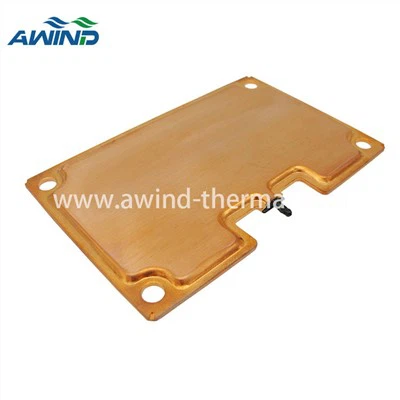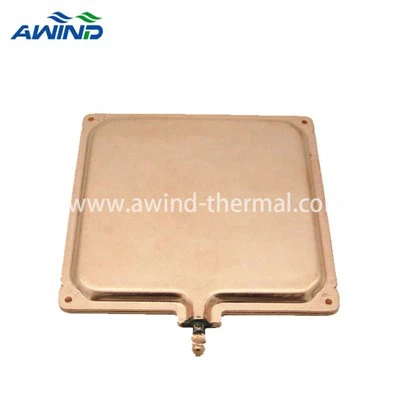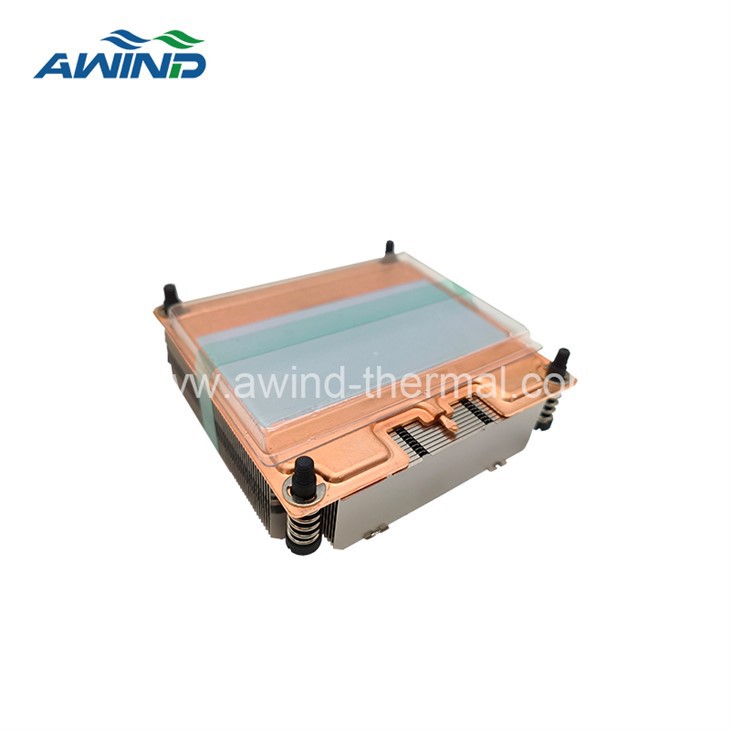


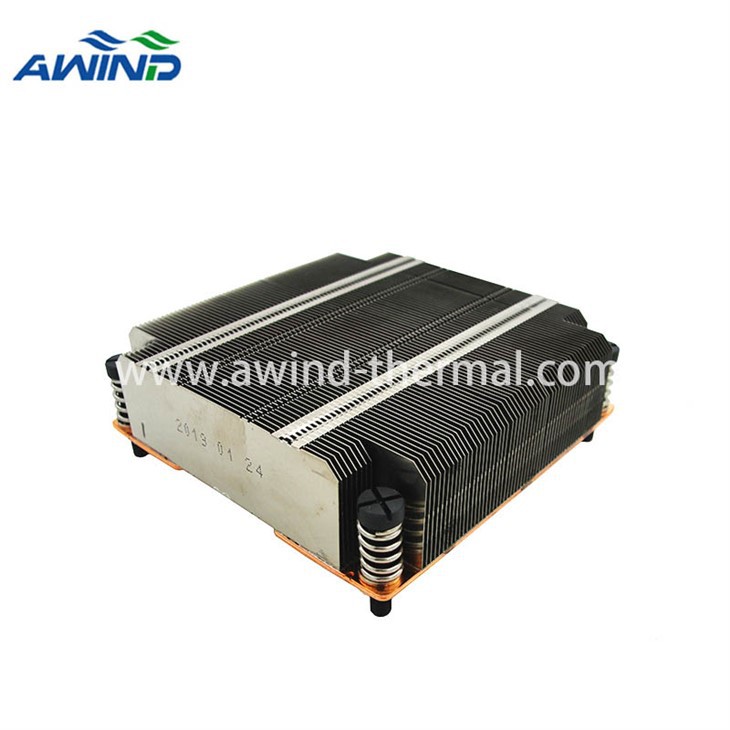


Copper Vapor Chamber Cooling Heat Sink
At present, the heat dissipation methods used for electronic devices mainly include graphite heat sinks, graphene heat sinks, heat conduction gel heat dissipation, heat pipe heat sink, vapor chamber, etc.
Among them, graphite heat dissipation, graphene heat dissipation and thermal conductive gel heat dissipation belong to heat dissipation materials with limited heat dissipation effect, mainly used in small electronic products; Heat pipes and vapor chamber are heat dissipation components with high heat dissipation efficiency, and are mainly used in large and medium-sized electronic equipment.
Although both heat pipes and vapor chamber use phase change to achieve heat dissipation, including four main steps of conduction, evaporation, convection, and condensation, their heat conduction methods are different. Heat pipes are one-dimensional heat transfer, while vapor chamber are two-dimensional heat transfer, with a larger contact area with the heat dissipation medium, more uniform heat dissipation, and better adaptability to the needs of applications in fields such as miniaturized electronic devices in the 5G era. Related studies have shown that the performance of a heat sink with a uniform heat plate is 20% to 30% higher than that of a heat pipe, which can further improve the thermal conductivity efficiency.

Principle and structure of vapor chamber
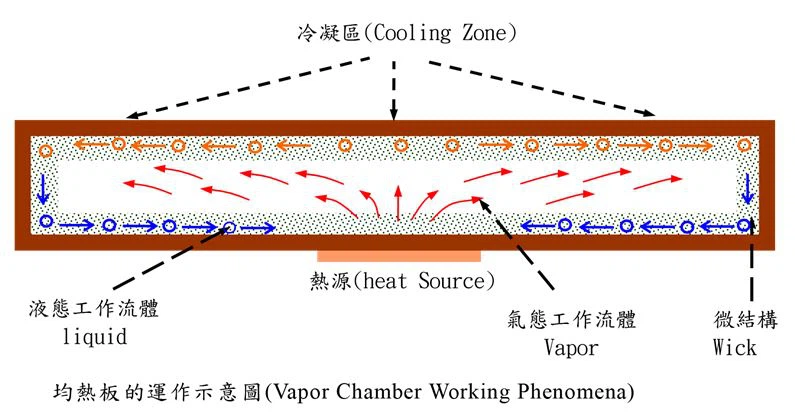
The vapor chamber consists of a sealed tube shell, a porous liquid absorbing core, and a working fluid.
The liquid working fluid absorbs heat and evaporates at the evaporation end, and is then transported in a gaseous form to the condensation end in the cavity, where it releases heat and condenses. The condensed liquid working fluid is driven by capillary force and transported back to the evaporation end through a porous suction core. In this cycle, the heating plate can operate independently without external power drive, thus completing efficient heat transfer.
The vc heatsinks can be divided into two types according to the direction of heat transfer, and the two types of soaking plates transfer heat along the thickness and length directions. The former can take away more heat through large-scale condensation; The latter can transmit over long distances and maintain excellent temperature uniformity performance.
The vapor chamber heat sink is mainly divided into standard vapor chamber heat sink (≥ 2mm), ultra-thin vapor chamber heat sink (<2mm), and extreme ultra-thin vapor chamber heat sink (≤ 0.6mm) according to different thicknesses.
Application of vapor chamber plates
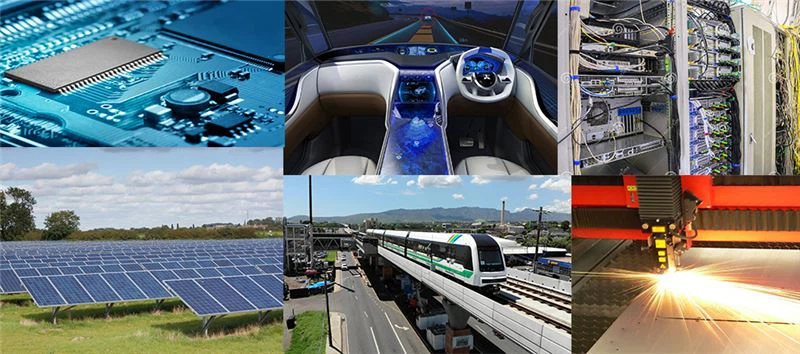
The application of vapor chamber plates can be divided into two categories based on different application environments, ground environment applications and aerospace environment applications. The former is in a gravity environment, while the latter is in zero gravity, microgravity, or supergravity environments.
The applications in ground environments mainly include the following aspects:
1) 5G base station: The vapor chamber heatsink is mainly used for shell heat dissipation of 5G base station BBU and AAU (active antenna unit).
As the performance requirements of 5G base stations for vapor chamber heatsink gradually increase, it is necessary to develop higher heat dissipation performance vapor chamber heatsink to meet the high-density heat dissipation needs of macro base stations, small base stations, etc.
2) Mobile phones, computers and other electronic products: The diversification and high performance of electronic products such as mobile phones and laptops have led to increasing overall energy consumption.
In recent years, most of the smart phones and laptops released by domestic manufacturers have adopted vapor chamber heat sink cooling scheme.
Against the backdrop of the continuous development of 5G smartphones and ipad towards high power, light weight, and high-performance, the ultra-thin, high-quality, and high-end design of the heat sink will become the mainstream development trend in the future.
3) In the field of high-power LED: With the increase in power consumption of LED chips and the changes in the structure of high-power LED lights (lightweight and easy to install), traditional heat dissipation is no longer able to meet the heat dissipation requirments of such lamps.
As a new way to solve the heat dissipation problem of LED light sources, the vapor chamber has gradually become the main demand and industry trend in the era of high-power LED with its unique heat dissipation advantages.
At present, market applications have been achieved in the field of automotive headlights, including companies such as Mercedes Benz, BMW series, and Meiss Lighting. There are also many scholars studying the application of vapour chamber in LED industrial and mining lights, projection lights, and other fields, but large-scale applications have not yet been achieved.
With the increasing demand for the application of svapour chambers in the low-end field of LED, how to reduce the application cost of vapour chambers will become an important research direction.
4) Thermal management of new energy vehicles: The new energy vehicle industry is developing rapidly, and as the power source of automobiles - power batteries, thermal management is one of the key technologies, generally achieved through the use of vapor chamber cooling modules at the cooling and power battery heat exchange interfaces.
The uniform and efficient thermal conductivity of the vapor chamber cooling modules can effectively reduce battery heat, improve battery stability and reliability.
5) High power laser: The electro-optical conversion efficiency of high-power lasers is mostly between 40% and 60%, and nearly half of the energy is transmitted out through heat.
At the same time, the heat generated by the laser during operation can also lead to a decrease in output power, a decrease in electro-optical conversion efficiency, an increase in threshold current, and other factors that affect the normal operation of the semiconductor laser.
The vapor chamber coolers can quickly homogenize the high heat flux density on the heat sink of semiconductor lasers, improving heat dissipation efficiency while ensuring stable optical performance of the laser.
Conclusion
Electronic components generate a large amount of heat in a small volume, and effective heat dissipation has become one of the main difficulties in further technological development.
Compared with traditional heat pipes, the copper vapor chamber, as a new type of heat conduction device, can directly contact the heat source and uniformly transfer heat in all directions. It has efficient and uniform heat conduction performance and is widely used in fields such as electronics, aerospace, and new energy vehicles.
Hot Tags: copper vapor chamber cooling heat sink, China, suppliers, manufacturers, factory, customized, free sample, made in China, Bonded Heat Sink, Vapor Chamber Heatsink, Vapor Chamber Heat Sink, Cold Forged Heat Sink, Ultra Thin Vapor Chamber Heatsink, Heat Pipe Heat Sink