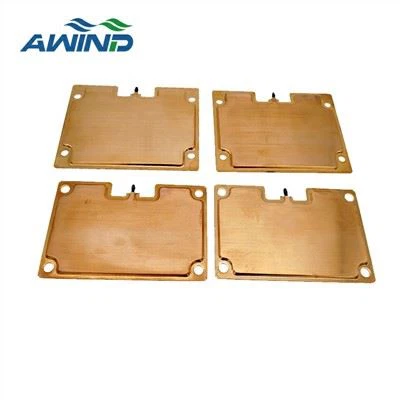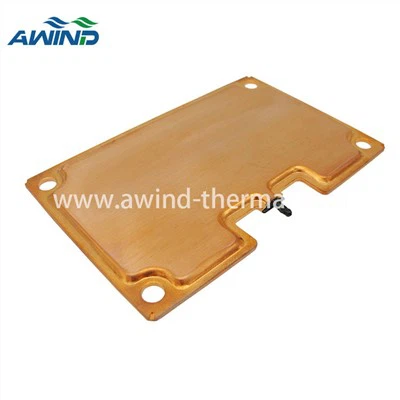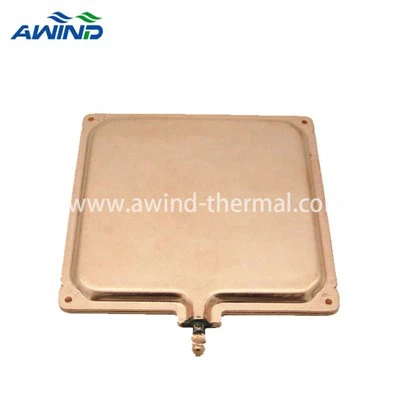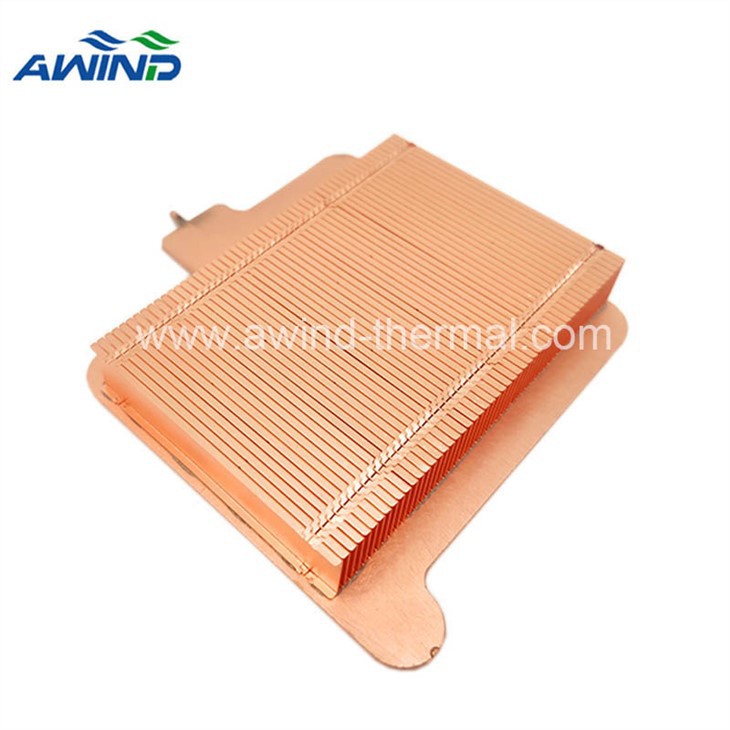


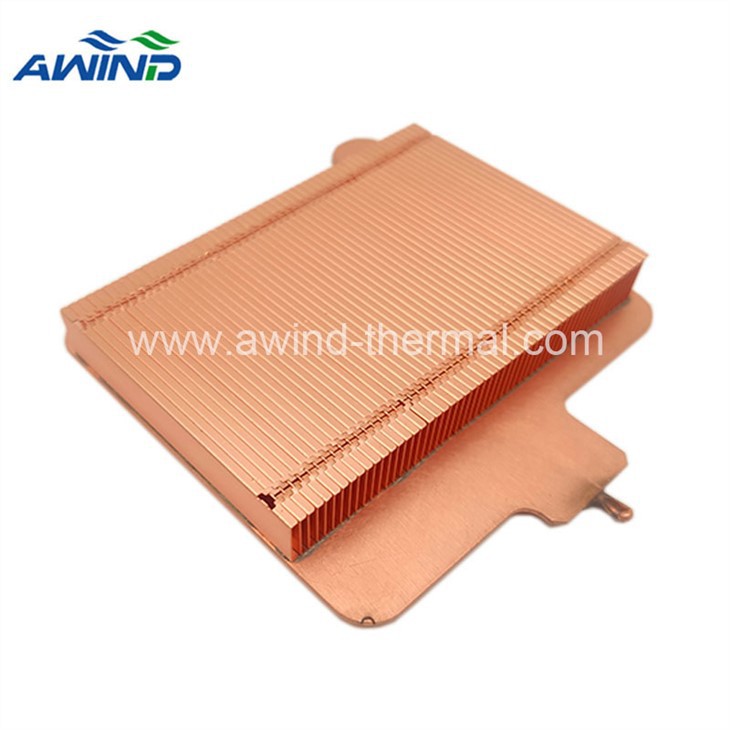
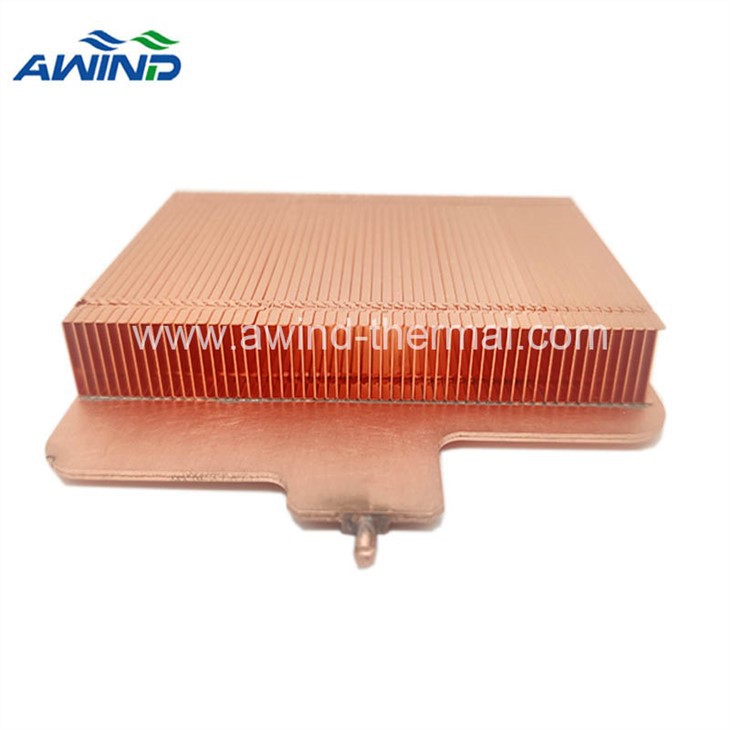

Vapour Chamber
The vapor chamber cooling modules is a vacuum chamber with micro structure on the inner wall, usually made of copper. When the heat is transferred from the heat source to the evaporation area, the coolant in the vapor chamber cavity begins to vaporize after being heated in a low vacuum environment. At this time, the heat is absorbed and the volume expands rapidly. The gas phase cooling medium rapidly fills the entire vapor chamber cavity. When the gas phase working medium contacts a relatively cold area, condensation will occur. The heat accumulated during evaporation is released by condensation, and the condensed coolant will return to the evaporation heat source through the micro structure capillary pipe. This operation will be repeated in the chamber.
Material: usually made of copper
Structure: vacuum chamber with micro structure on the inner wall
Mainly used for: the server, high-end graphics cards and other products
Thermal resistance value: 0.25 ℃/W
Application temperature: 0 ℃~150 ℃
The vc heatsink plate is usually used for electronic products requiring small volume or rapid heat dissipation. At present, it is mainly used in servers, high-end graphics cards and other products. It is a strong competitor of heat pipe. The vc heatsink plate is a flat plate in appearance, with a cover at the top and bottom to close each other,
It is supported by copper columns. The upper and lower copper sheets of the homogenizing plate are made of oxygen free copper, usually with pure water as the working fluid, and the capillary structure is made of copper powder sintering or copper mesh. As long as the vapor chamber plate maintains its flat plate characteristics, the shape outline depends on the environment of the applied heat dissipation module, without too much restriction, and there is no restriction on the placement angle when using. In practical application, the temperature difference measured at any two points on the flat plate can be less than 10 ℃, which is more uniform than the heat conduction effect of the heat pipe to the heat source, hence the name of the vapor chamber plate. The thermal resistance of the common temperature equalizing plate is 0.25 ℃/W, which is used at 0 ℃~150 ℃.
There are four main steps of solidification. The vapor chamber is a two-phase fluid device formed by injecting pure water into a vessel full of microstructures. The heat enters the plate through heat conduction from the external high temperature area. The water around the point heat source will quickly absorb the heat and vaporize into steam, taking away a large amount of heat. Reuse the latent heat of water vapor. When the steam in the board diffuses from the high pressure area to the low pressure area (i.e. the low temperature area), and the steam contacts the inner wall with lower temperature, the water vapor will quickly condense into liquid and release heat energy. The condensed water flows back to the heat source point by the capillary action of the microstructure to complete a heat transfer cycle, forming a two-phase cycle system where water and steam coexist. The gasification of water in the vapor chamber continues, and the pressure in the chamber will maintain balance with the change of temperature.
The heat conduction coefficient of water is low when it operates at low temperature, but because the viscosity of water will change with temperature, the vapor chamber can also operate at 5 ℃ or 10 ℃. Since the liquid reflux is effected by capillary force, the vapor chamber is less affected by gravity, and the application system design space can be used at any angle. The vapor chamber is a completely sealed passive device without power supply or any moving components.

Diffusion bonding and composite microstructure of copper mesh
Different from the heat conduction tube, the vapor chamber cooling modules is made by vacuuming first and then injecting pure water, so that all microstructures can be filled. The filled medium does not use methanol, alcohol, acetone, etc., but uses degassed pure water, so there will be no environmental problems, and the efficiency and durability of the vapor chamber can be improved.
There are mainly two types of microstructures in the homogenizing plate: powder sintering and multi-layer copper mesh, both of which have the same effect. However, the powder quality and sintering quality of the powder sintered microstructure are not easy to control, while the multilayer copper mesh microstructure is applied with the copper sheet and copper mesh above and below the diffusion bonding vapor chamber, and its aperture consistency and controllability are better than the powder sintered microstructure, and the quality is more stable. The high consistency can make the liquid flow more smoothly, which can greatly reduce the thickness of the microstructure and the thickness of the vapor chamber.
The industry has a plate thickness of 3.00mm at 150W heat transfer. Because the quality of the vapor chamber with copper powder sintered microstructure is not easy to control, the overall heat dissipation module usually needs to be supplemented by the design of heat conduction tubes.
The bonding strength of the multi-layer copper mesh with diffusion bonding is the same as that of the base metal. Because of its high air tightness, it does not need any solder, and there will be no micro structure blockage during the bonding process. The vapor chamber made of the diffusion bonding has better quality and longer service life.
If the hole leaks after fabrication by diffusion bonding method, it can also be repaired by rework. In addition to the diffusion bonding of multi-layer copper mesh, the vapor chamber design of bonding smaller aperture copper mesh near the heat source can make the pure water in the evaporation area replenish rapidly and the circulation of the overall vapor chamber more smooth.
Furthermore, the micro structure has been modularized into a regional design, which can be applied to the heat dissipation design of multiple heat sources. Therefore, the heat flux per unit area of the vapor chamber designed by diffusion bonding and regional hierarchical design is greatly increased, and the heat transfer effect is better than that of the sintered microstructure homogenizing plate.

The application of temperature equalizing plate in computer
Due to the relatively mature technology and low cost of the heat pipe, the current market competitiveness of the vapor chamber heatsink is still inferior to that of the heat pipe.
However, due to the rapid heat dissipation characteristics of the vapor chamber, its current application is aimed at the market where the power consumption of electronic products such as CPU or GPU is more than 80W~100W. Therefore, the vapor chamber are mostly customized products, which are suitable for electronic products requiring small volume or rapid heat dissipation. At present, it is mainly used in servers, high-end graphics cards and other products. In the future, it can also be used in high-order telecommunications equipment, high-power LED lighting and other heat dissipation.
The future development of vapor chamber
At present, the main methods for fabricating the two-dimensional heat dissipation capillary structure of vapor chamber include sintering, copper mesh, groove, metal film, etc.
In terms of technical development, how to further reduce the thermal resistance of the vapor chamber and enhance its heat conduction effect in the future, so as to match the lighter fins, such as aluminum, has always been the goal of researchers. In terms of production, it is the direction of industrial development to improve production yield and find ways to reduce the cost of overall cooling solutions.
In terms of product application, the vapor chamber has expanded from one-dimensional to two-dimensional heat conduction compared with the heat pipe.
In the future, in order to solve other possible heat dissipation applications, the vapor chamber solution is being developed in succession.
Conclusion:
The vapor chamber is a kind of flat heat pipe, which can quickly transfer the heat flow gathered on the heat source surface and diffuse it to the large area of condensation surface, thus promoting the heat emission and reducing the heat flow density of the component surface.
Structure of the vapor chamber: a completely closed flat cavity is composed of a bottom plate, a frame and a cover plate. The wall inside the cavity is equipped with a liquid absorbing capillary core structure. The capillary core structure can be a metal wire mesh, a micro groove, a fiber wire, or a metal powder sintered core and several structure combinations. If necessary, a supporting structure shall be set inside the chamber to overcome the deformation caused by depression and heating due to vacuum suction.
Advantages of vapor chamber: small size can make the heatsink as thin as entry-level low power consumption; Heat conduction is fast, and it is not easy to cause heat accumulation. The shape is not limited, and it can be square, round, etc., to adapt to various heat dissipation environments. Low starting temperature; High heat transfer speed; Good temperature equalization performance; High output power; Low manufacturing cost; Long service life; Light weight.
Application of vapor chamber in computer field: most of the vapor chamber are customized products, which are suitable for electronic products requiring small volume or rapid heat dissipation. At present, it is mainly used in servers, tablets, high-end graphics cards and other products. In the future, it can also be used in high-order telecommunications equipment, high-power LED lighting and other heat dissipation.
Hot Tags: vapor chamber cooling modules, China, suppliers, manufacturers, factory, customized, free sample, made in China, Vc Heat Sink, Cold Forged Heat Sink, Vapor Chamber Heat Sink, Vapor Chamber Heatsink, Ultra Thin Vapor Chamber Heatsink, Bonded Heat Sink