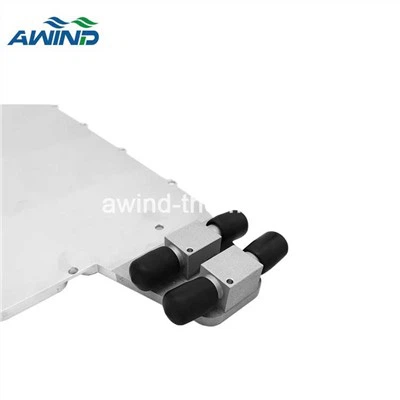
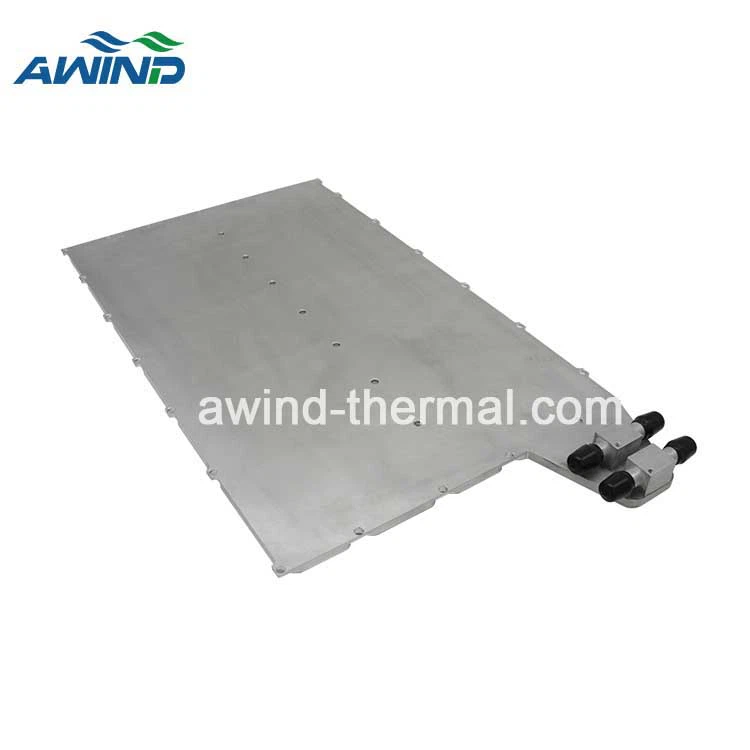
Previously, most data centers used air-cooled heat sinks to dissipate heat and ensure stable provision of computing power. The development of artificial intelligence requires increasingly high computing power, and the heat generated by processors is growing. The air-cooled heatsink is no longer able to handle the load, so liquid cooling has gradually become the mainstream trend.
With the acceleration of artificial intelligence applications, is the demand for liquid cooled servers urgent?
The urgent demand for liquid cooling systems in artificial intelligence (AI) is mainly due to the extremely high hardware performance requirements of AI computing tasks, especially in deep learning, large-scale network training and inference, where computation intensity and energy consumption are very high.
High computing power demand: AI, especially deep learning, requires extremely high computing power from hardware, resulting in a large amount of heat generated by the hardware during operation.
Long term high load operation: AI tasks often require long-term high load operation, and liquid cooling can dissipate heat more efficiently, ensuring that equipment does not overheat during long-term operation.
Hardware density and miniaturization: Liquid cooling systems supports higher density hardware configurations, improves space utilization, and effectively manages heat in limited spaces.
Energy efficiency and sustainability: The efficient heat dissipation of liquid cooling systems helps reduce energy consumption and carbon footprint of data centers, enhancing sustainability.
Therefore, with the increasing demand for AI computing, liquid cooling technology has become one of the key technologies to ensure the stable and efficient operation of AI hardware, especially in high load, long-term operation, and large-scale data center environments.
What are the forms of liquid cooling?
·Direct Liquid Cooling (DLC): This method uses coolant to directly contact the heat source of components such as the server's CPU and GPU. The liquid flows through the cooling plate (heat exchanger) and directly absorbs heat, and then conducts the heat to the outside of the cooling system through the cooling pipeline. The liquid cooling method greatly improves the heat conduction efficiency and can effectively maintain hardware stability in high-density computing environments.
··Immersion Cooling: Immersion cooling is the process of immersing the entire server or computing hardware in a special insulating liquid. This liquid can efficiently absorb and remove heat without the need for complex heat exchangers. Immersion liquid cooling systems can significantly increase the density of servers while effectively managing heat.
··Indirect Liquid Cooling: In this method, there is a heat exchanger between the coolant and the server hardware, where the coolant takes away heat and the hardware directly contacts the heat exchanger. This method is suitable for some special application scenarios where the coolant does not directly come into contact with the equipment, but can still efficiently conduct heat.
How can existing data centers support the deployment of high-density AI servers with liquid cooling?
To support the deployment of high-density AI servers with liquid cooling, existing data centers need to undergo a series of renovations and optimizations. These renovations typically involve adjustments to physical facilities, cooling systems, energy supply, and server configurations. The following are the main requirements and steps:
1. Space and layout adjustment
Space design: Liquid cooling systems typically require dedicated racks or spaces to install cooling devices, such as coolant distribution systems and cooling plates. Existing data centers may need to re plan rack layouts to efficiently integrate these new systems into existing facilities.
High density configuration: AI typically requires a high-density server cluster, especially GPU servers. To adapt to this, data centers need to provide more rack space or higher density racks to accommodate additional cooling equipment.
2. Integration of liquid cooling technology
In order to adapt to direct cooling, existing data centers need to install liquid cooling interfaces in servers and racks, and ensure that the liquid cooling system is compatible with traditional air-cooled systems.
3. Energy management and cooling system improvement
Energy supply: Liquid cooling systems may be more efficient than traditional air conditioning systems, but still require additional power to support the flow of coolant, pumps, and heat exchange equipment. Therefore, data centers may need to strengthen power supply, UPS (uninterruptible power supply), and backup power systems to ensure the stable operation of cooling systems.
Heat recovery and management: Liquid cooling helps to manage heat more efficiently because it is more efficient than air cooling and can transfer heat more centrally to the cooling system. For existing data centers, it may be necessary to strengthen heat recovery facilities to reuse the heat dissipated, such as for heating office areas.
4. Automation and monitoring of cooling system
Intelligent cooling management system: With the deployment of liquid cooling, the management of cooling systems will become more complex. Data centers can deploy intelligent cooling management systems based on sensors and data analysis, which can monitor server temperature, liquid flow rate, pressure and other parameters in real time, automatically adjust coolant flow rate and temperature to ensure the best cooling effect.
Leak detection and safety: Liquid cooling systems must have comprehensive leak detection and protective measures. Existing data centers need to deploy leak monitoring sensors and take necessary emergency measures to avoid hardware damage caused by liquid leaks.
5. Compliance and Environmental Impact
Compliance requirements: Liquid cooling systems must comply with industry safety standards, environmental regulations, and clean energy usage policies. The data center needs to ensure that the liquid cooling system complies with local environmental, fire, and building code requirements.
Environmental friendliness: Compared to traditional air cooling, liquid cooling systems are more energy-efficient and environmentally friendly. Therefore, adopting liquid cooling can help improve the energy efficiency (PUE) of data centers and reduce their carbon footprint.
6. System upgrade and expansion
Compatibility with existing systems: For existing data centers, it is necessary to ensure that the liquid cooling system is compatible with existing IT equipment and power systems during the renovation process. If it is a large-scale expansion, it may be necessary to increase the capacity of cooling infrastructure and IT infrastructure.
Gradual transition: As the introduction of liquid cooling may require time and investment, a gradual transition can be considered by replacing high-density computing tasks or servers in specific areas with liquid cooling equipment first, and then fully promoting it after the system stabilizes
How should operators plan the combination of air-cooled and liquid cooled servers when constructing new data centers?
When constructing new data centers, operators should plan the combination of air-cooled and liquid cooled servers reasonably based on different load types, energy efficiency requirements, cooling needs, and future scalability factors. Here are some key considerations and planning suggestions:
1. Load density and computing requirements
High density computing tasks (AI, big data, GPU intensive tasks): For these tasks, more efficient heat dissipation methods are usually required. Liquid cooling systems (especially direct liquid cooling, DLC) provide better thermal management effects, effectively support high-density computing needs, and ensure stable equipment operation. Therefore, for servers carrying high load tasks such as AI, machine learning, and big data analysis, it is recommended to prioritize liquid cooling technology.
Low to medium density tasks: For some traditional applications with light loads and low computational density (such as web services, file storage, etc.), air-cooled systems are sufficient to meet the requirements and have relatively low deployment costs. Therefore, air-cooled servers can be used under these loads.
2. Energy efficiency and operating costs
Advantages of liquid cooling: Due to its higher heat transfer efficiency, liquid cooling systems can more effectively remove heat from servers compared to traditional air cooling systems, thereby reducing the burden on air conditioning and traditional cooling equipment. Therefore, liquid cooling systems have higher energy efficiency and lower PUE (Energy Usage Efficiency Ratio), which can significantly reduce the operating costs of data centers, especially for long-term operational goals.
Advantages of air cooling: Air cooling systems have lower initial investment and relatively simple maintenance and management, so for loads with less stringent energy efficiency requirements, air cooling systems may be more cost-effective. Especially in the early stages of data centers, using air cooling systems can reduce construction costs.
3. Scalability and flexibility
Modular design: When building a new data center, modular design can be considered, which means deploying air-cooled and liquid cooled servers in different zones according to different load types and cooling requirements. For example, designing high-density, high load areas as liquid cooling zones, while designing low-density, traditional task processing areas as air-cooled zones. This can meet the needs of different computing tasks without requiring a unified cooling method selection for the entire data center.
Scalability considerations: With the growth of AI and compute intensive applications, the load on data centers may change. In the initial stage, a mixed configuration of air cooling and liquid cooling can be selected according to demand, and as the computational load increases, the liquid cooling system can be gradually expanded. Through flexible design, the cooling method can be adjusted according to changes in load in the future.
4. Combination and collaborative work of cooling systems
Air cooling and liquid cooling work together: In many cases, air cooling and liquid cooling systems are not completely opposite, they can work together. For example, in most data centers, liquid cooling systems can be used to cool high-density computer equipment such as GPUs and AI servers, while air cooling is used to cool low load equipment areas. In this way, the air-cooled system can serve as an auxiliary cooling system for the liquid cooling system, ensuring the overall temperature control efficiency of the data center.
The combination of indirect liquid cooling and direct liquid cooling: In the selection of liquid cooling, a combination of indirect liquid cooling (ILC) and direct liquid cooling (DLC) can also be considered. Indirect liquid cooling is typically used to cool the entire air in the computer room, while direct liquid cooling is used for specific high-performance servers. The combination of the two can optimize the deployment of liquid cooling systems and reduce investment risks.
5. Energy supply and environmental considerations
Renewable energy and green data centers: Liquid cooling systems can significantly improve energy efficiency, reduce the use of air cooling systems, and help data centers reduce energy consumption. Therefore, when planning the combination of liquid cooling and air cooling, priority should be given to the deployment of liquid cooling, especially if the data center relies on renewable energy sources such as solar and wind power for operation. Liquid cooling systems can use these energy sources more efficiently.
Environmental Protection and Compliance: Liquid cooling systems typically use closed-loop coolant, which not only improves energy efficiency but also reduces the impact of refrigerants on the environment. Therefore, when facing environmental regulations such as REACH or F-Gas in Europe, liquid cooling may be a more sustainable choice.
6. Consideration of cooling infrastructure and supporting facilities
The configuration of water cooling and liquid cooling: Liquid cooling systems typically require infrastructure support for water cooling or other cooling fluids. Data centers should ensure the reliability of water sources during design, especially in water scarce areas where the efficiency of water circulation systems or the use of renewable cooling fluids need to be considered.
Cooling units and distribution: Data centers may require additional cooling units (such as cooling towers, heat exchangers, liquid pumps, etc.) to support liquid cooling systems. When designing, it is necessary to consider how to effectively integrate these facilities and flexibly adjust the temperature of the entire data center when using air cooling.
7. Market Trends and Technological Evolution
Adaptation of future technologies: The rapid development of AI and high-performance computing requires data centers to have the ability to adapt flexibly. The continued maturity and cost reduction of liquid cooling technology may make it mainstream in the future, while air cooling may still maintain its position in some low-density applications. Therefore, data centers should consider future technological trends when constructing and choose cooling solutions that are suitable for long-term development plans.
8. Suggestions for overall planning
Initial stage: It is recommended to prioritize the use of air-cooled systems and reserve space and interfaces for the possible introduction of liquid cooling systems in the future. For example, reserving liquid cooling pipeline interfaces when designing racks, or designing modular racks that allow for the replacement or upgrade of cooling systems as needed in the future.
High density area: For future high-density server areas (such as GPU servers, AI training rooms, etc.), liquid cooling areas can be planned to meet their high requirements for heat dissipation while reducing energy waste.
Flexible combination: Depending on the load and task, a cooling scheme combining air cooling and liquid cooling can be adopted to achieve the highest operational efficiency and energy savings.
Hot Tags: liquid cooling system in data central for ai, China, suppliers, manufacturers, factory, customized, free sample, made in China, Vacuum Brazed Liquid CooLED Plates, Vacuum Brazing Liquid Cooling Heatsink, Liquid Cold Plate