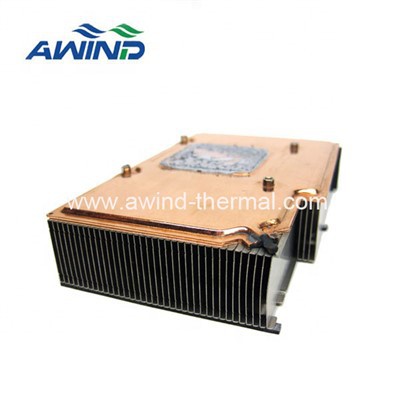
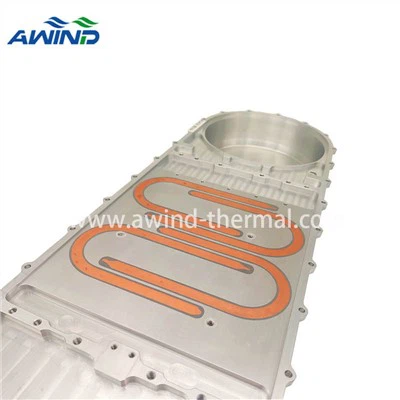
CNC is a commonly used process for manufacturing heat sinks. CNC technology has the advantages of high precision, high efficiency, diversity, automation, flexibility, and multifunctionality. CNC is particularly suitable for manufacturing the samples of heat sinks because it does not require mold which can greatly reduce costs.
In CNC machining, we will observe that CNC usually has flowing liquid to assist in cutting. What is this liquid? Why use this liquid?
This liquid is CNC cutting fluid, a metal processing fluid specifically developed for CNC machine tools. It is mainly composed of sulfurized lard, sulfurized fatty acid esters, chlorinated paraffin, and epoxy soybean oil as extreme pressure lubricants, compounded with different proportions of rust inhibitors, surfactants, antioxidants, etc. Simultaneously possessing excellent cooling performance, lubrication performance, rust prevention performance, oil removal and cleaning function, anti-corrosion function, and easy dilution characteristics.

Why use this liquid?
1) Lubrication effect
The lubricating effect of cutting fluid during the cutting process can reduce the friction between the front cutting surface and chips, and between the rear cutting surface and the machined surface, forming a partial lubricating film, thereby reducing cutting force, friction, and power consumption, lowering the surface temperature and tool wear of the friction area between the tool and the workpiece blank, and improving the cutting performance of the workpiece material. During the grinding process, after adding grinding fluid, the grinding fluid infiltrates between the grinding wheel particles and workpiece, as well as between the particles and debris, forming a lubricating film that reduces friction between the interfaces, prevents wear of the cutting edge of the abrasive particles and adhesion of chips, thereby reducing grinding force and frictional heat, improving the durability of the grinding wheel and the surface quality of the workpiece.
2) Cooling effect
In the process of metal cutting, the friction between squid cutting tools and the surface of the workpiece generates heat in the workpiece, chips, and cutting tools. The plastic deformation of metals in the shear zone also generates heat, which can have many adverse effects, including thermal expansion, chemical reactions such as oxidation, surface welding, and so on. Cutting fluid is used to cool tools and workpieces to prevent these effects
3) Cleaning function
In the process of metal cutting, it is required that the cutting fluid has a good cleaning effect. Remove generated chips, abrasives, iron powder, oil stains, and sand particles, prevent contamination of machine tools, workpieces, and cutting tools, and keep the cutting edge of the tool or grinding wheel sharp, without affecting the cutting effect. For oil-based cutting oils, the lower the viscosity, the stronger the cleaning ability, especially for cutting oils containing light components such as kerosene and diesel, the better the permeability and cleaning performance. Water based cutting fluid containing surfactants has a better cleaning effect because it can form an adsorption film on the surface, preventing particles and sludge from adhering to the workpiece, tool, and grinding wheel. At the same time, it can penetrate into the interface where particles and sludge adhere, separate it from the interface, and carry it away with the cutting fluid to keep the cutting fluid clean.
4) Rust prevention effect
In the process of metal cutting, the workpiece comes into contact with corrosive media such as oil sludge generated by the decomposition or oxidation of environmental media and cutting fluid components, and the surface of machine tool components in contact with cutting fluid will also corrode as a result. In addition, when the workpiece is temporarily stored after processing or during the flow between processes, it is also required that the cutting fluid has a certain rust prevention ability to prevent corrosive substances such as oil sludge in the environmental medium and residual cutting fluid from corroding the metal. Especially during the humid and rainy season in southern China, attention should be paid to rust prevention measures between processes.
5) Other functions
In addition to the above four functions, the cutting fluid used should have good stability and should not produce precipitation or delamination, oil separation, soap separation, and aging during storage and use. Has a certain resistance to bacteria and mold, and is not easily moldy or biodegradable, leading to odor and spoilage. No damage to painted parts, no harm to human health, no irritating odor. No smoke, fog or minimal smoke during use. Easy to recycle, low pollution, easy to treat for discharged waste liquid, and can meet the national industrial wastewater discharge standards after treatment.
Why can't we use clean water instead of cutting fluid?
Cutting fluid is formulated by compounding different proportions of rust inhibitors, surfactants, antioxidants, etc. So cutting fluid has more functions such as rust prevention, lubrication, oil removal, and corrosion prevention than pure water. And after treatment, the cutting fluid can meet the national industrial wastewater discharge standards and will not cause harm to the environment.
Hot Tags: cutting fluid for cnc machining, China, suppliers, manufacturers, factory, customized, free sample, made in China, AL Extrusion Heat Sink, Folded Fin Heat Sink