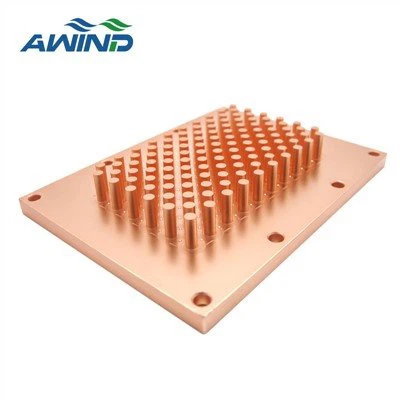
Why are heat sinks so hot ?
The reason why heatsink are hot is that their design purpose is to transfer heat from sources such as mechanical or electronic devices to working fluids such as air or liquids. Heat sinks are usually made of high thermal conductivity materials such as copper or aluminum. The heatsink is attached to the heat source to absorb heat; Heat naturally moves from the high-temperature area to the low-temperature area through the heatsink. This means that the heatsinks is usually hotter near the heat source and cooler at the edges
How does a heat sinks work?
A heat sink uses a thermal conductor to remove heat from a heat source and attract it to its surface area, which then comes into contact with cooling air or fluid. The entire process includes basic 4 steps:
1. The heat source generates heat. A heat source can be any system that generates heat during operation and requires cooling to function properly. It can be mechanical, electrical, chemical, nuclear, solar, or friction systems.
2. Heat is transferred from the heat source. Through natural conduction, heat enters the heat sink and moves away from the heat source. This process is directly related to the thermal conductivity of the heat sink material. Heat sink materials are usually copper and aluminum, as they are high thermal conductivity materials
3. Heat distribution in the heatsink: Heat is naturally transmitted through the heatsinks through natural conduction, and then transferred from a high-temperature environment to a low-temperature environment through the heatsink. This means that the heat distribution of the heatsinks will be inconsistent. Therefore, heatsinks are usually hotter towards the heat source and cooler towards the end.
4. Keep the heat away from the radiator. Fluid (air or non-conductive liquid) passes through the surface of the heat sink and transfers heat to the surrounding environment through thermal diffusion and convection. This depends on the temperature gradient, so if the ambient temperature is not lower than the heat sink, convection and subsequent heat dissipation will not occur. The total surface area of the heat sink becomes beneficial because a larger surface area provides a larger area for thermal diffusion and convection to occur.
Will the heat sink break?
A heat sink is a component that helps prevent electronic devices from overheating by absorbing and dissipating the heat generated by device components. If the heat sink is not functioning properly or is not of the correct type for the heat source device, the heat sink may be damaged:
Dust: Dust can enter the equipment, reducing the efficiency of the heat sink.
Type: There are different types of heat sinks, such as passive and active. Passive heat sinks are not as effective in heat transfer as active heat sinks.
Size: The size of the heat sink will limit its thermal conductivity. If a large amount of heat is dissipated but a heat sink with a smaller heat dissipation area is used, it may not achieve good heat dissipation effect.
Material: The material used to manufacture the heat sink fins and base will affect its performance.
Hot Tags: common questions about heat sinks, China, suppliers, manufacturers, factory, customized, free sample, made in China, Cold Forging Heat Sink for LED