Custom Heat Sink Manufacturer for Electronic Cooling
A heat sink is a thermal management component used to transfer heat away from electronic and power components. By increasing the available surface area and transferring heat to the surrounding air or another cooling medium, a properly designed heat sink helps control component temperature during operation.
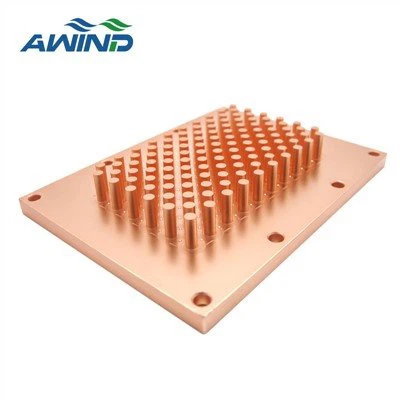
AWIND manufactures custom heat sinks for electronic, power electronics, industrial and other thermal management applications. Depending on the required thermal performance, available installation space, material and production requirements, we can manufacture different types of aluminum and copper heat sinks, including extruded, skived fin, bonded fin and heat pipe heat sink assemblies.
What Is a Heat Sink?
A heat sink is normally attached to a heat-generating component through a thermal interface. Heat travels from the component into the heat sink base and then spreads through the fins, where it can be dissipated to the surrounding air.
The actual performance of a heat sink depends on more than the material itself. Fin geometry, base thickness, fin spacing, airflow, contact conditions, heat source location and available installation space all affect the final thermal performance.
For this reason, selecting a heat sink based only on its external size or material may not provide the expected cooling result. The heat sink needs to be designed around the actual operating conditions of the application.

Common Types of Heat Sinks
Different manufacturing processes are suitable for different thermal and mechanical requirements.
Aluminum Extrusion Heat Sink
Aluminum extrusion is widely used for heat sinks with a continuous fin profile. The extrusion process allows the base and fins to be formed as one piece, providing a practical solution for many electronic and industrial applications.
Extruded heat sinks can be cut to the required length and further machined for mounting holes, grooves or other installation features.
This type of heat sink is commonly considered when a consistent fin structure and repeatable production are required.

Skived Fin Heat Sink
A skived fin heat sink is manufactured by cutting and lifting fins directly from the metal base. This process can produce thin and closely spaced fins while maintaining a continuous connection between the fins and the base.
Skived fin structures are useful when a large heat dissipation area is required within a relatively limited footprint. Copper and aluminum can both be considered depending on the thermal and mechanical requirements.

Bonded Fin Heat Sink
A bonded fin heat sink is made by attaching separately formed fins to a base plate. Compared with conventional extrusion, this manufacturing method provides more flexibility in fin height, thickness and spacing.
Bonded fin structures can therefore be considered for applications where the required fin geometry cannot be easily achieved through standard extrusion.
AWIND can combine bonded fins with different base structures and heat transfer components according to the application requirements.
Heat Pipe Heat Sink
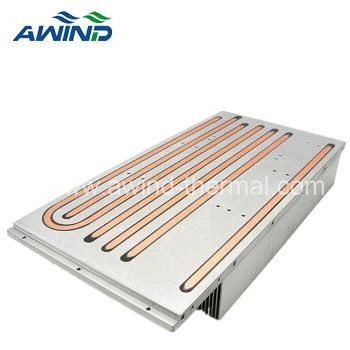
A heat pipe heat sink uses heat pipes to transfer heat from a concentrated heat source to a larger finned area.
This design is useful when the heat source is relatively small or when the available space makes it difficult to position a conventional heat sink directly over the entire cooling area.
Heat pipes can be combined with aluminum or copper heat sinks to create a customized thermal solution for electronics and other applications.

Heat Sink Materials
Aluminum Heat Sink
Aluminum is widely used for heat sinks because it combines relatively low weight, good thermal conductivity, machinability and suitability for extrusion.
Aluminum extrusion is particularly suitable for applications requiring repeated profiles and stable production dimensions.
Copper Heat Sink
Copper provides higher thermal conductivity than aluminum and can be considered when heat spreading requirements are more demanding.
However, copper is heavier and generally more expensive than aluminum. Material selection should therefore be based on the actual thermal and mechanical requirements rather than thermal conductivity alone.
For some applications, a combination of copper and aluminum can provide a balance between heat spreading performance, weight and cost.

How Is a Custom Heat Sink Manufactured?
A custom heat sink normally starts with the thermal and mechanical requirements of the application rather than a standard product size.
The design may need to consider the heat source location, mounting method, available space, airflow direction, material, fin structure and required surface treatment.
AWIND supports multiple manufacturing processes, including aluminum extrusion, CNC machining, skived fin, bonded fin, heat pipe assembly, vacuum brazing, laser welding, reflow soldering, stamping and bending.
Different processes can also be combined within one heat sink assembly when required.
For example, a heat sink may use an extruded or machined aluminum base together with heat pipes, while another application may require a bonded fin structure with a machined copper or aluminum base.
Custom Heat Sink Manufacturing in China
As a heat sink manufacturer in China, AWIND provides custom thermal components based on customer drawings, specifications and application requirements.
Our manufacturing capabilities cover different heat sink structures rather than being limited to a single production method. This allows the manufacturing process to be selected according to the required geometry, material, production volume and assembly requirements.
For new projects, customers can provide drawings or basic information such as the heat source, approximate heat load, available installation space, material preference and mounting requirements. Our team can then review the product structure and manufacturing approach.
Heat Sink Surface Treatment and Finishing
Surface treatment can be selected according to the material, application environment and assembly requirements.
For aluminum heat sinks, anodizing and other finishing options can be considered when required. Additional machining may also be applied to provide mounting holes, threads, grooves or other interfaces.
The appropriate finishing method depends on the final application and should be considered together with the heat sink material and contact requirements.
Heat Sink Quality and Inspection
For custom heat sinks, dimensional consistency and process control are important, particularly when the product is used in series production.
Depending on the project requirements, inspection can cover dimensions, material, surface condition, machining features and assembly characteristics. First Article Inspection (FAI) can also be used to verify the initial production parts against the approved requirements.
For heat sink assemblies involving brazing, welding or other joining processes, the relevant process and quality requirements can be defined according to the product structure.
Custom Heat Sink Solutions from AWIND
AWIND manufactures custom aluminum and copper heat sinks for electronic and industrial applications.
Our product capabilities include aluminum extrusion heat sinks, skived fin heat sinks, bonded fin heat sinks, heat pipe heat sinks and customized copper-aluminum thermal structures.
Instead of offering only standard heat sink sizes, AWIND works with customer drawings and application requirements to develop the appropriate material, structure and manufacturing process.
If you are looking for a custom heat sink manufacturer in China, send us your drawing or basic application information. We can review the required structure, material and manufacturing process for your project.
Hot Tags: Heat Sink Basic Introduce, China, suppliers, manufacturers, factory, customized, free sample, made in China, High Quality Cooling Heat Sink, CPU Heat Sink Design, Vapor Chamber, Heat Sink with Copper Heat Pipe, High Quality Heat Sink, Zipper Fin Heat Sink