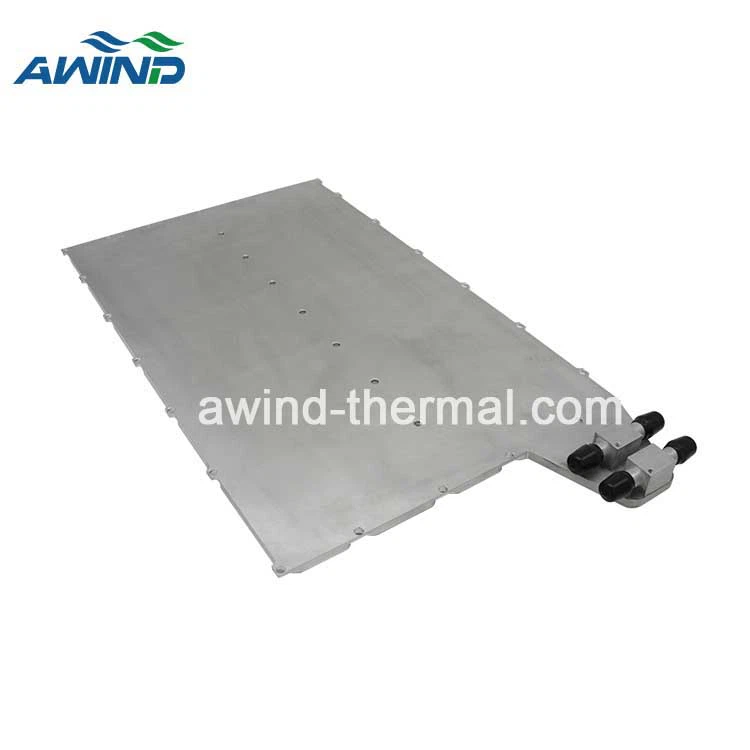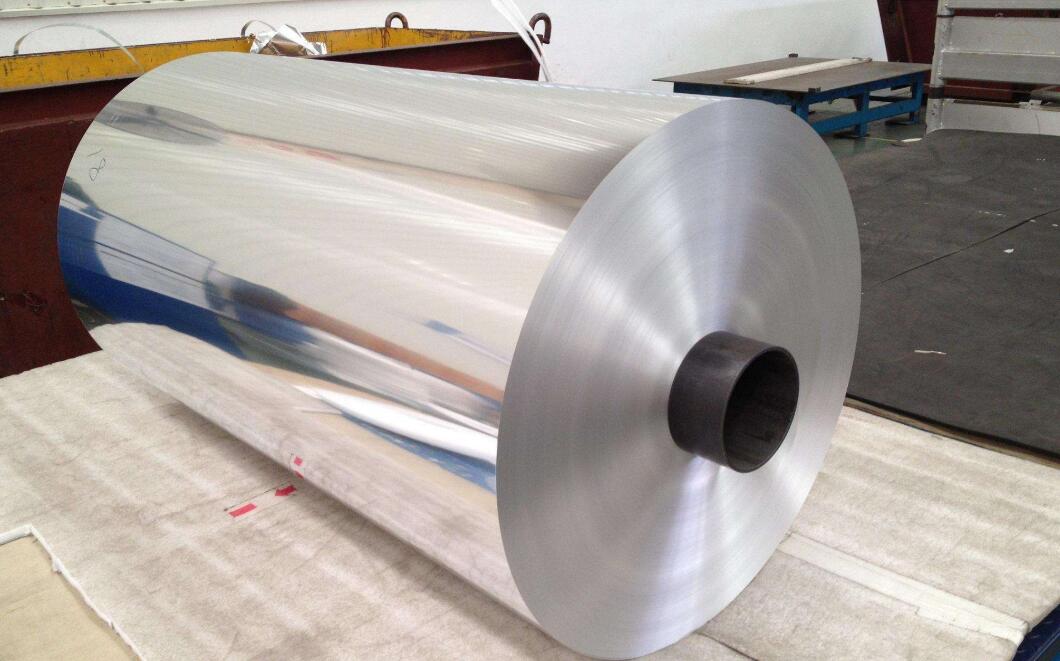
solder joints in aluminum vacuum brazed water cooling plates
Vacuum brazing is a common process in the production of aluminum water cooling plates. Many people may not know that between the upper and lower cover plates, we need to place a layer of "solder", which is like an "adhesive" that can melt at high temperatures and firmly bond the two pieces of metal together.
1. What is solder joint?
Solder joint is a thin sheet material made of aluminum alloy. During vacuum brazing heating, it melts before the base material and flows into the contact gap. After cooling, it forms a strong welded joint.
It can be simply understood as: solder joint is the "glue" of the metal plate.

2. Why use solder pads?
Ensure connection strength: tightly connect the upper and lower cover plates with the flow channel, without leakage.
Avoid excessive melting of the base material: The melting point of the solder joint is lower than that of the base material, making welding more controllable.
Improve thermal conductivity and sealing performance: The welded joint interface is smooth, which is conducive to the heat dissipation of the liquid cooling plate.
3. Common types of aluminum solder joints
In aluminum water cooling plates, different solder joints will be selected for different scenarios:
① Al Si system (most commonly used)
Typical composition: Al-7~12% Si
Melting point range: approximately 577-585 ℃ (varying with Si content)
Features:
Good fluidity, suitable for filling large contact surfaces (such as upper and lower cover plates).
The joint has high strength and good corrosion resistance.
The most widely used for vacuum brazing aluminum alloy parts.
Application: The vast majority of aluminum water-cooled plates will choose this type of brazing material.
② Al Si Cu system
Typical composition: Al-7% Si-2% Cu
Melting point range: approximately 524-548 ℃ (slightly lower than Al Si system)
Features:
The melting point is lower, suitable for situations where the thermal impact on the base material should be minimized.
The strength and corrosion resistance are slightly inferior to Al Si.
Application: Used for thin-walled water cool plate structures that require minimal deformation.
③ Al Ge system
Typical Composition: Contains Ge
Melting point range: approximately 420-450 ℃ (lower)
Features:
Ultra low melting point can reduce deformation of the base material.
But its strength and corrosion resistance are poor, and it is not commonly used for high-performance water-cooled plates.
Application: Only used on small components with special requirements
4. How to choose the appropriate solder pads?
Ordinary structure water cooling plate ->select Al Si solder pads (the most mainstream).
Thin walled/deformation resistant water cooling plate → Select Al Si Cu solder pads.
Special low-temperature brazing requirements will only be considered for Al Ge series.
5. Summary
Although solder joints are small, they play a crucial role in aluminum water cooling plates.
Different materials and melting points of solder joints determine the smoothness of the welding process and the reliability of the final product.
Hot Tags: solder joints in vacuum brazing cooling plate, China, suppliers, manufacturers, factory, customized, free sample, made in China, Vacuum Brazing Liquid Cooling Heatsink, Vacuum Brazed Liquid CooLED Plates, Liquid Cold Plate