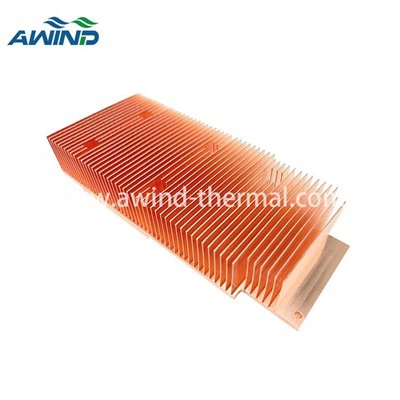
Heat Sink Surface Roughness: The Ultimate Guide (Ra, Performance & Measurement)
The roughness of the heat sink
In the heat dissipation design of electronic products, many people focus on materials (aluminum, copper) and structures (fins, pin fins, extrusion vs cold forging), but often overlook a detail - the surface roughness of the heat sink.
Surface roughness directly affects thermal conductivity, contact thermal resistance, and even air convection heat transfer efficiency, so it cannot be ignored in high-performance heat dissipation design.
What is the roughness of a heat sink?
Surface roughness (Ra, Arithmetic Average Roughness) refers to the average value of micro roughness on the surface of a workpiece, expressed in μm (micrometers).
For heat sinks, there are mainly two types:
1. Bottom contact surface roughness: the interface where the heat sink directly contacts the chip/power device.
2. Surface roughness of fins: The heat dissipation surface of the heat sink is related to air convection heat transfer.

The Impact of Surface Roughness on Heat Sink Performance
1. Thermal interface (bottom)
Excessive roughness can lead to insufficient contact area, increased thermal resistance, and decreased thermal conductivity efficiency.
Usually required: Ra ≤ 1.6 μ m, and some high-performance applications even require Ra ≤ 0.8 μ m, combined with thermal interface material (TIM).
2. Heat dissipation fins (surface)
Moderate roughness is beneficial for enhancing airflow disturbance and improving convective heat transfer.
Too smooth → limited convection efficiency.
Too rough → dust is more likely to adhere, and long-term heat dissipation performance decreases.
Generally, it can be controlled within Ra 3.2-6.3 μ m.

Common Manufacturing Processes and Roughness Levels
| Process method | Roughness (Ra, mm) | Characteristics |
| Extrusion | 3.2-6.3 | Low cost, rough surface of fins, requiring post-processing to improve the bottom surface |
| Cold forging | 1.6-3.2 | High density and good surface smoothness |
| Die Casting | 3.2-12.5 | Can form complex shapes, but the surface roughness is high and the thermal conductivity is slightly poor |
| CNC Machining | 1.6-3.2 | High precision and is commonly used for secondary machining of the bottom surface |
| Grinding/Polishing | 0.4-0.8 | High performance requirements to improve chip contact surface |
How to Measure Surface Roughness of Heat Sinks?
1. Stylus Profilometer
Use a needle to slide on the surface of the workpiece, measure the height change, and output the Ra value.
High precision and this is the most common method.

2. Optical Interferometry
Analyzing surface fluctuations through optical scanning is suitable for detecting ultra smooth surfaces.
3. Coordinate Measuring Machine (CMM) with Surface Module
Can be combined with size measurement and roughness detection.
4. Microscopy Analysis
Using an electron microscope to observe the microstructure and qualitatively analyze the surface roughness.
Conclusion
The roughness of the heat sink, although a detail, plays a crucial role in thermal management:
The smaller the roughness of the bottom surface, the better (to ensure thermal contact).
The surface of the fins is moderately rough (enhancing convective heat transfer).
Different processing techniques determine the level of roughness, and when designing, it is necessary to consider both performance and cost comprehensively.
For high-power applications, it is recommended to pay attention to the material, structure, roughness, and process when selecting heat sinks, and to control them through reliable testing methods to achieve the best heat dissipation effect.
Hot Tags: heat sink surface roughness: the ultimate guide (ra, performance & measurement), China, suppliers, manufacturers, factory, customized, free sample, made in China, AL Extrusion Heat Sink, Folded Fin Heat Sink