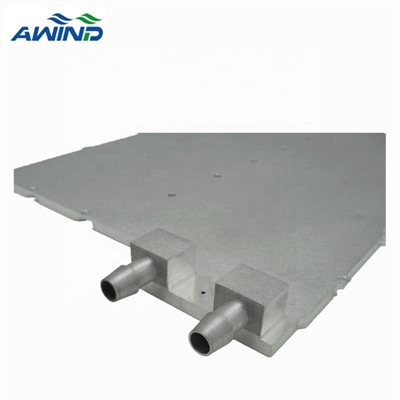
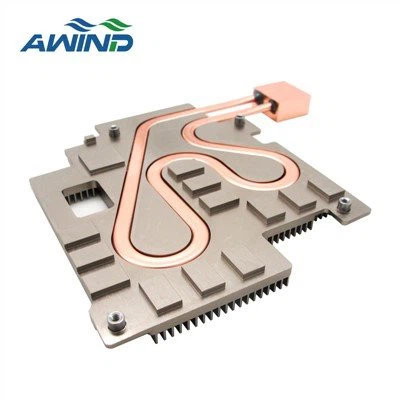
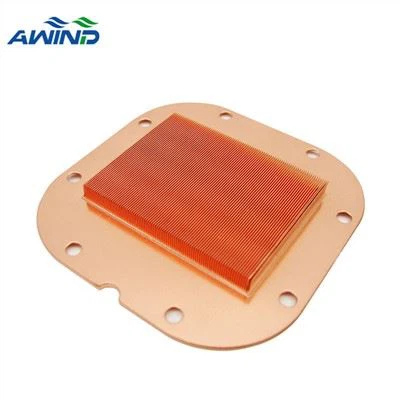
We have gained a good reputation in the field of technological research and the implementation of OEM Heat Sink, Liquid Cooling Plate, Vc Heat Sink. Our product structure has undergone a transformation, and we already have the core competitiveness of large-scale and industrialized development. Our company will strictly abide by the promise, actively forge ahead, further increase research and development investment, develop better products to share with users, and wholeheartedly provide the best service for them. Our struggle is to make the product exquisite, make the service extreme, make the solution optimal, and let the customer experience the solution and service with emotion.
Brazing
Brazing is the jointing of metals using a molten filler material, which on cooling forms a joint.
The filler metal melting temperature is above 450℃, but below the melting point of the metals.
How does it work?
Brazing joints the base metals by creating a metallurgical bond between the filler metal and the base metals.
When molten, the filler metal is drawn into the joint by capillary action.

How do you supply filler metal to 100's of joint simultaneously?
Brazing sheet!

Aluminum oxide
Aluminum oxide characteristics:
Hardness significantly above 400Mpa
High resistance to chemicals
The oxide interferes with brazing
Aluminum owes many of its properties to very strong adherent oxide film on the surface.
This oxide must be removed or broken up if joining is to occur.
There are a number of possibilities of achieving this.

Comparison of brazing processes:
CAB | Vacuum brazing | Air furnace brazing | |
Heating | Radiation/Convection | Radiation | Forced convection |
Use of flux | Yes | NO | NO |
Quantity of flux | <5g/㎡ | - | 30~50g/m³ |
Pre braze treatment | Moderate demands | High demands | Moderate demands |
Post braze treatment | NO | NO | Yes |
Aqueous wastes | NO | Yes | |
Atmospheric emissions | NO | NO | NO |
Continuos process | Yes | NO | Yes |
Investment | 80 | 100 | 90 |
Operating expense | 80 | 100 | 100 |
CAB furnace brazing process sequence
The CAB process sequence is depending on: Heat exchanger design, Cleaning method, Flux application method.

CAB furnace braze cycle

Factors determining CAB production success or failure
1. Good product fit-up ( gap tolerance 0.1 to 0.15mm)
2. Adequate quantity of filler metal
3. Uniformity of flux coating
4. Interaction of flux and alloying elements
5. Furnace conditions (temperature time profile, temperature uniformity, furnace atmosphere)

The demand for our Aluminum Liquid Cooling Plate Block is growing, thus we are constantly innovating and upgrading our technology to meet customer requirements. We constantly think and practice corresponding to the change of circumstance, and grow up. Our company insists on the road of brand development and works closely with many first-tier brands at home and abroad.
Hot Tags: Vacuum Brazing Process, China, suppliers, manufacturers, factory, customized, free sample, made in China, Cold Forging Heat Sink for LED, Skived Fin Heat Sink, Water Cold Plate Heat Sink, Liquid Cold Plate for Power Supply, High Quality Heat Sink, Liquid Cooling Plate
[[ProKeywords]]