


Why is photovoltaics receiving increasing attention
Currently, many governments in countries and regions are promoting the development of renewable energy to achieve emission reduction targets. As an important clean energy source, the demand for photovoltaics continues to increase. Moreover, there is a gradual reduction in dependence on fossil fuels and a shift towards pursuing clean energy globally. Furthermore, with the development of the global economy and population growth, the demand for electricity continues to increase. Therefore, photovoltaic energy, as a clean and renewable energy source, has received great attention. Overall, the demand for the photovoltaic market is continuously increasing and is expected to maintain a strong growth momentum in the coming years
Will photovoltaics overheat?
Photovoltaic modules may indeed overheat, especially in high-temperature environments or prolonged exposure to strong sunlight. Overheating can lead to a decrease in component efficiency and may even shorten its lifespan. To address this issue, many systems have adopted cooling technologies such as water cooling systems, air cooling, or design optimization to ensure that components operate within the optimal temperature range, thereby improving efficiency and reliability.
Awind has rich experience in photovoltaic heat dissipation, using the liquid cooling system to continuously circulate water cooling for photovoltaic panels, ensuring heat dissipation effect without noise, leakage, and environmental protection. Why is it recommended to use a liquid cooling system to dissipate heat from photovoltaics? Because water cooling plates have the following advantages in photovoltaic heat dissipation.
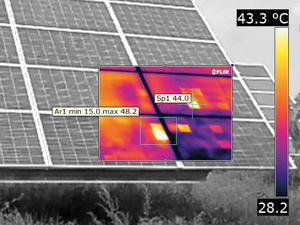

The role of water-cooled panels in photovoltaic heat dissipation is mainly reflected in the following aspects:
1. Improve heat dissipation efficiency: Water cooling plates quickly remove the heat generated by photovoltaic modules through flowing water, reducing the operating temperature of the modules and thus improving the overall efficiency of the photovoltaic system.
2. Extend service life: Lowering the operating temperature can slow down the aging rate of photovoltaic modules, extend their service life, and reduce the frequency of maintenance and replacement.
3. Improve power generation efficiency: The power generation efficiency of photovoltaic modules usually decreases with the increase of temperature. Using water cooling plates can keep the modules near the optimal working temperature and improve power generation efficiency.
4. Improve energy conversion: Through more effective heat dissipation, photovoltaic modules can operate under higher load conditions, increasing energy conversion rates.
5. Adapt to high temperature environments: In high temperature environments, water cooling plates can effectively cope with extreme temperatures, ensuring the stability and reliability of the system.
Therefore, the water cooling system meets the requirements of photovoltaic heat dissipation. AWIND's 20+ years of heat dissipation experience will provide you with professional and cost-effective heat dissipation solutions, and welcome your inquiries at any time.
Hot Tags: liquid cooling system for photovoltaics energy, China, suppliers, manufacturers, factory, customized, free sample, made in China, Liquid Cold Plate with Copper Tube, Water Cold Plate Heat Sink, Water Cooling Plate with Copper Pipe, Liquid Cooling Plate, Heatsink Design, Liquid Cold Plate for Power Supply


