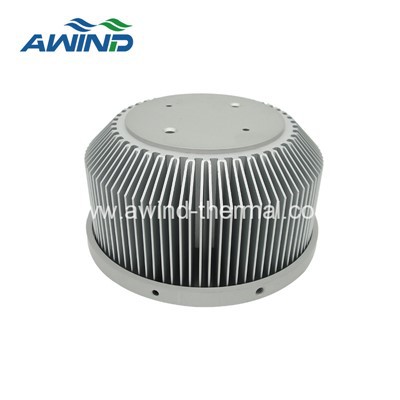
The performance of electronic products is becoming increasingly powerful, while the integration and assemble are constantly increasing, leading to a sharp increase in their working power consumption and heat generation. The material failure caused by heat concentration in electronic components accounts for the vast majority of the total failure efficiency, and thermal management technology is a key factor to consider in electronic products. In this regard, it is necessary to strengthen the thermal control of electronic components.
The efficient heat dissipation of electronic components is influenced by the principles of heat transfer and fluid dynamics.
The heat dissipation of electrical components is to control the operating temperature of electronic devices, thereby ensuring their working temperature and safety.
It mainly involves different aspects such as heat dissipation and materials. At present, electronic components mainly use natural, forced, liquid, refrigeration, and guided cooling methods for heat dissipation.
Natural heat dissipation
Natural cooling is a commonly used cooling method, which utilizes the high thermal conductivity of materials to carry away heat and dissipate it into the air.
In the absence of specific wind speed requirements, the natural convection heat sink used is copper, aluminum heat sinks, aluminum extrusion &copper extrusion, cnc machining or die casting to achieve product heat dissipation.
Natural heat dissipation and cooling methods are mainly applied in electronic components with low temperature control requirements, low-power equipment and components with relatively low heat flux density for device heating.

Forced cooling
The forced cooling method is a way to accelerate the airflow around electronic components and take away heat through methods such as fans.
Air cooling is also a common heat dissipation technology, which has the advantages of relatively simple manufacturing, relatively low price, and simple installation. In electronic components, this method can be applied if the space is spacious enough for air flow or if some heat dissipation facilities are installed.
In practice, increasing the total area of heat dissipation appropriately and generating a relatively large convective heat transfer coefficient on the heat dissipation surface are the main ways to enhance this convective heat transfer capability.

Liquid cooling
Applying liquid cooling to electronic components for heat dissipation is a heat dissipation method based on chips and chip components. Liquid cooling can be mainly divided into two methods: direct cooling and indirect cooling.
The indirect liquid cooling method refers to the use of auxiliary devices such as liquid modules, thermal conductivity modules, liquid injection modules, and liquid substrates to transfer heat between heating components (such as liquid cooling plate) ,through an intermediate medium system, rather than direct contact with electronic components.
The direct liquid cooling method, also known as immersion cooling, refers to the direct contact between the liquid and related electronic components, passing through the coolant and taking away heat. It is mainly used in devices with relatively high heat consumption volume density or in high-temperature environments.

Guiding heat dissipation
By using heat transfer elements to transfer the heat emitted by electronic devices to another environment.
In the process of electronic circuit integration, high-power electronic devices gradually increase and the size of electronic devices becomes smaller, which requires the heat dissipation device itself to have certain heat dissipation conditions.
Heat pipe technology itself has thermal conductivity and good isothermal , and has the advantages of variable heat flux density and good constant temperature characteristics in application, which can quickly adapt to the environment. Therefore, it is widely used in the heat dissipation of electronic and electrical equipment, and can effectively meet the flexible, efficient, and reliable characteristics of heat dissipation devices.
Currently, in electrical equipment, the cooling of electronic components and the heat dissipation of semiconductor components are widely used. Heat pipe is an efficient and phase change heat transfer mode for heat conduction, which is widely used in electronic component heat dissipation.

Hot Tags: different heat sinks for electronic components, China, suppliers, manufacturers, factory, customized, free sample, made in China, Anodized Heatsink, Skived Fin Heat Sink, Copper or Aluminum Heatsink, Round Aluminum Heatsink for LED, Aluminum Extrusion Profiles Heat Sink, Heat Sink