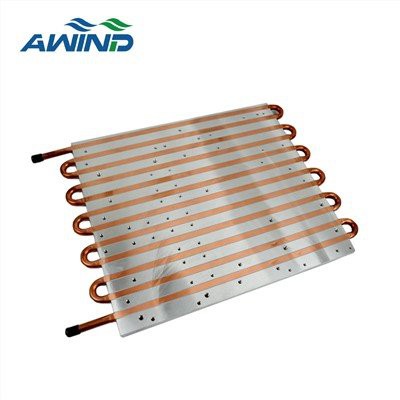
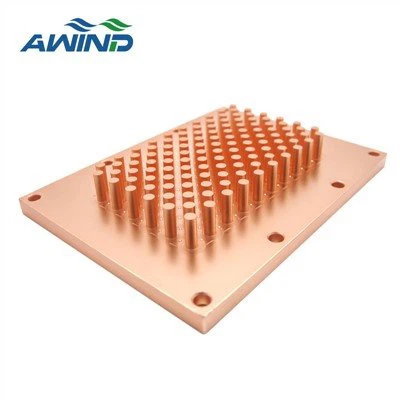
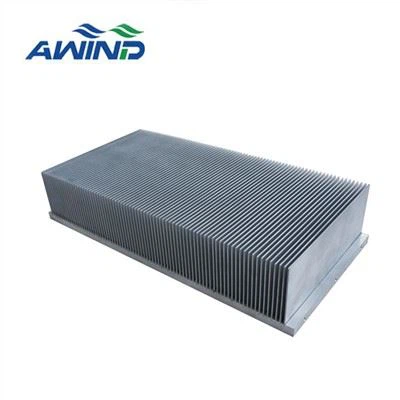
On the basis of existing products, we insist on researching and developing FSW Liquid Cooling Plate, Skived Fin Heat Sink, Aluminum Cold Plates for Battery new products on the market, which has strengthened the core competitiveness and development stamina of the company. The company is speeding up the construction of follow-up products, developing new products, and realizing a complete industrial chain. We provide a broad development platform for all employees, so that their abilities can be quickly improved and their self-worth can be realized. Our production system is well managed, and we adhere to the corporate purpose of "resource innovation, safety and environment". We insist on being market-oriented, concentrate on technological innovation and exquisite quantity of craftsmanship, and vigorously promote the "people-oriented" management policy.
Brazing
Brazing is the jointing of metals using a molten filler material, which on cooling forms a joint.
The filler metal melting temperature is above 450℃, but below the melting point of the metals.
How does it work?
Brazing joints the base metals by creating a metallurgical bond between the filler metal and the base metals.
When molten, the filler metal is drawn into the joint by capillary action.

How do you supply filler metal to 100's of joint simultaneously?
Brazing sheet!

Aluminum oxide
Aluminum oxide characteristics:
Hardness significantly above 400Mpa
High resistance to chemicals
The oxide interferes with brazing
Aluminum owes many of its properties to very strong adherent oxide film on the surface.
This oxide must be removed or broken up if joining is to occur.
There are a number of possibilities of achieving this.

Comparison of brazing processes:
CAB | Vacuum brazing | Air furnace brazing | |
Heating | Radiation/Convection | Radiation | Forced convection |
Use of flux | Yes | NO | NO |
Quantity of flux | <5g/㎡ | - | 30~50g/m³ |
Pre braze treatment | Moderate demands | High demands | Moderate demands |
Post braze treatment | NO | NO | Yes |
Aqueous wastes | NO | Yes | |
Atmospheric emissions | NO | NO | NO |
Continuos process | Yes | NO | Yes |
Investment | 80 | 100 | 90 |
Operating expense | 80 | 100 | 100 |
CAB furnace brazing process sequence
The CAB process sequence is depending on: Heat exchanger design, Cleaning method, Flux application method.

CAB furnace braze cycle

Factors determining CAB production success or failure
1. Good product fit-up ( gap tolerance 0.1 to 0.15mm)
2. Adequate quantity of filler metal
3. Uniformity of flux coating
4. Interaction of flux and alloying elements
5. Furnace conditions (temperature time profile, temperature uniformity, furnace atmosphere)

Our company put quality first, establish a good brand awareness, strengthen and enlarge our Rapid Cooling Liquid Aluminum Cold Plate for New Energy Vehicles product line. Our company reflects the quality of international standards in every link in customer service, after-sales tracking and technical support and our company will rely on this to promote continuous innovation. 'Honest management, innovative service' is the theme of our survival and development.
Hot Tags: Vacuum Brazing Process, China, suppliers, manufacturers, factory, customized, free sample, made in China, Zipper Fin Heat Sink, High Quality Cooling Heat Sink, FSW Liquid Cooling Plate, Liquid Cold Plate with Copper Tube, Vapor Chamber Heatsink, Vacuum Brazed Liquid CooLED Plates
[[ProKeywords]]